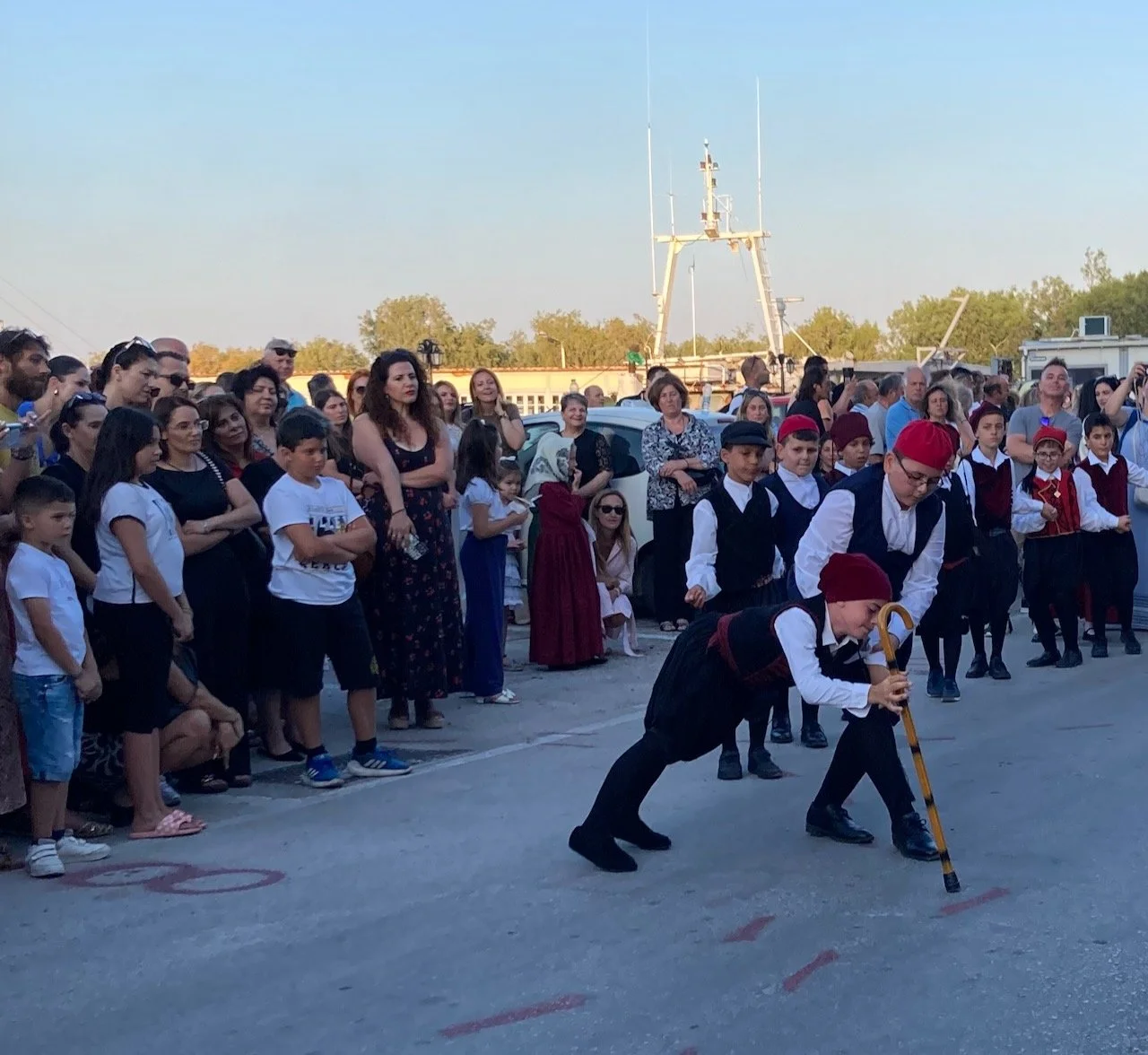
Janey Runci — The Dance of the Mechanikos
‘How to stay with the crippled, the maimed, how to go on living on Kalymnos, as the Kalymnians do, their beautiful children dancing the old dances and among those dances now the heart-breaking dance of the sponge divers, the mechaniki?’ Janey brings some of her own pain to this difficult question.
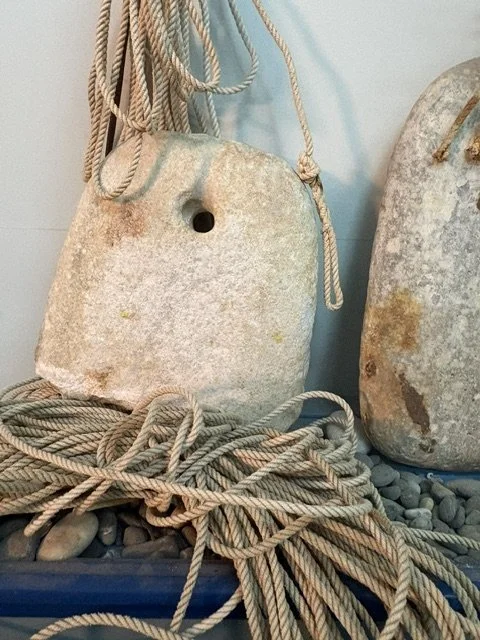
Helen Wyatt — In the Museum
The boat-propeller… the shark… Both were dangers facing the sponge diver. In these two little windows into the Kalymnos Nautical Museum, Helen shows how both could mean death, or life.
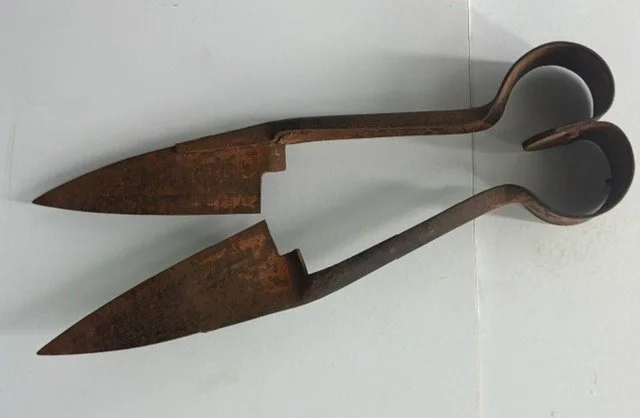
Maureen McCarthy — The Shears
Maureen weaves memories of her childhood on an Australian farm with an object she saw in the Nautical Museum at Kalymnos. For two very different groups of men, the vital work tool was the same. (‘Clip go the shears, boys, clip clip clip…’)
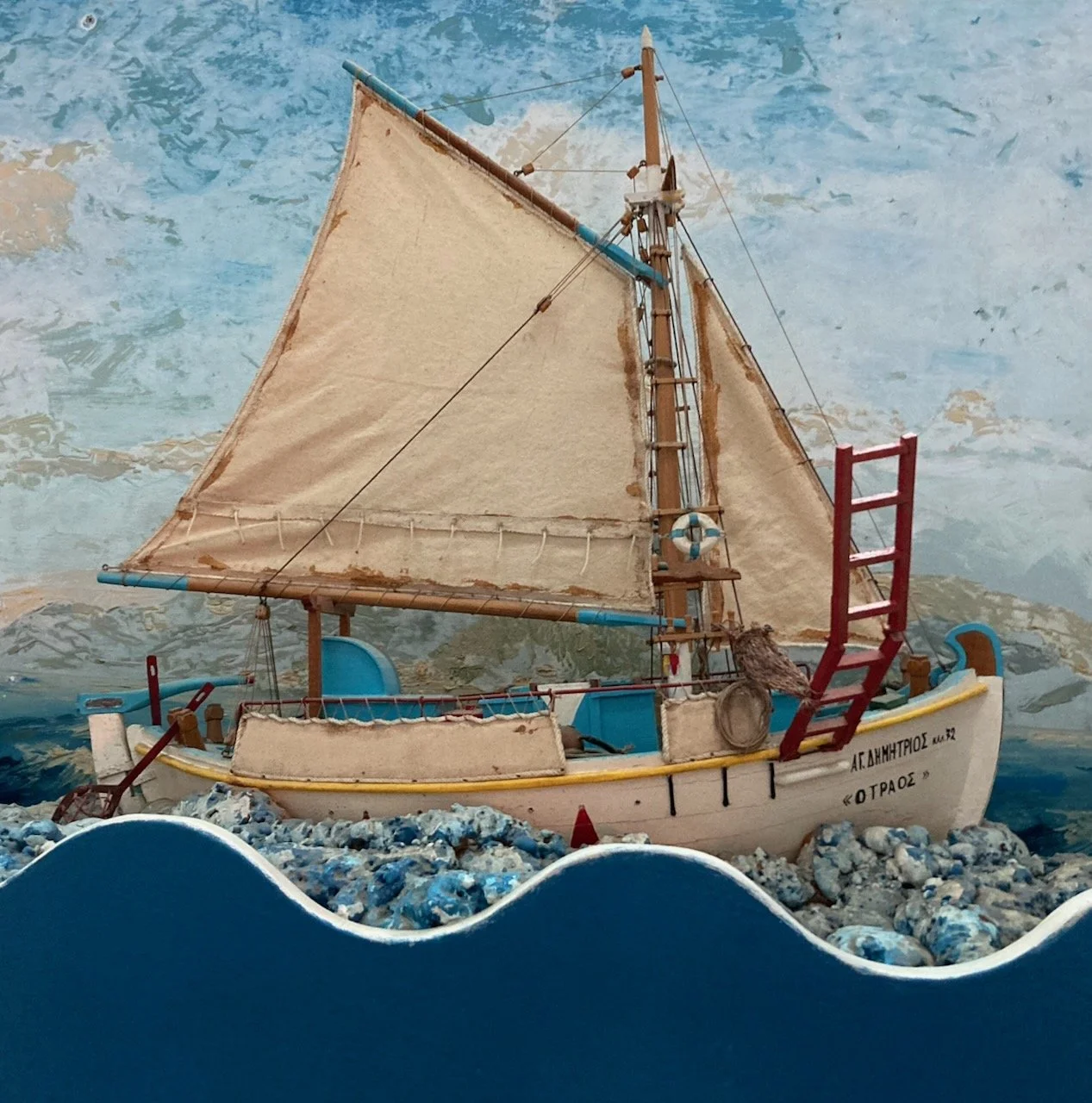
Paula Garrett — In the Nautical Museum
Paula reminds us that Kalymnos is an island of sailors as well as an island of spongers. Writing from the images she sees in the Nautical Museum, she summons up a wonderful connection between the divers of old and the climbers of today.
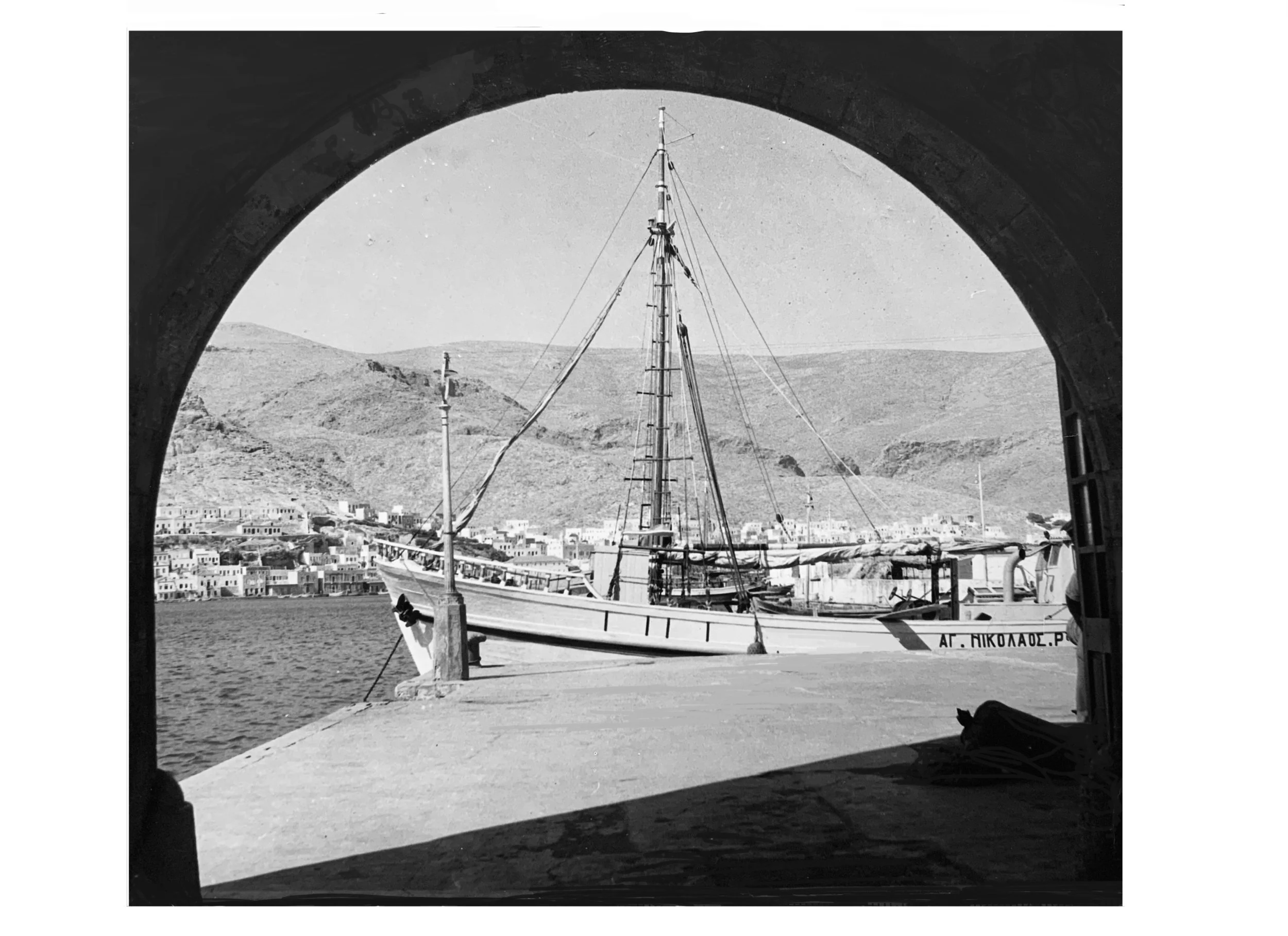
Lesley Walker — Kyria Eleni
Lesley takes a photo we saw in the Kalymnos Maritime Museum and brings it to life as a piece of fiction, dramatising the moment when the sponge fleet returns, and the women wait to learn the fate of their loved ones.
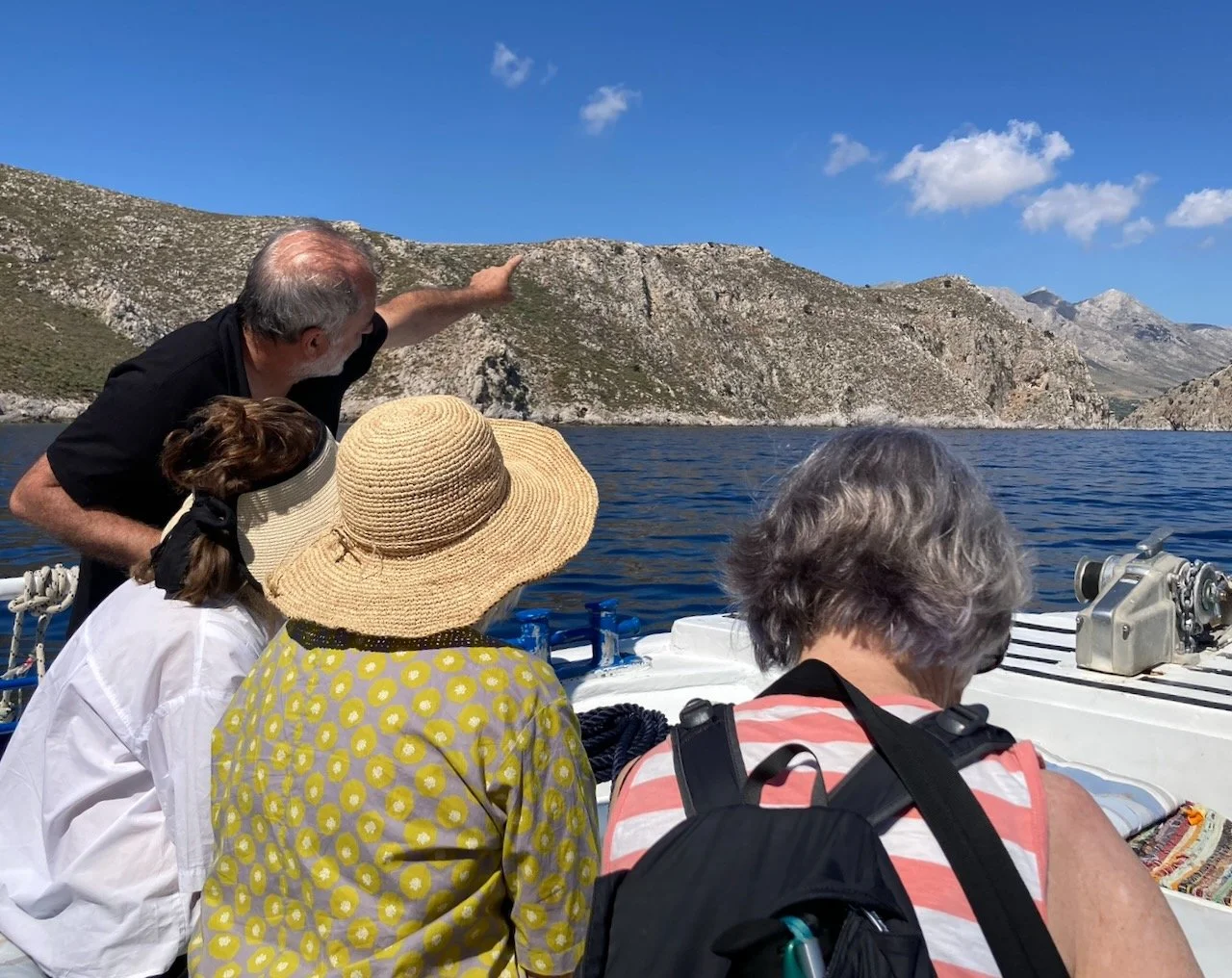
Janey Runci — Making the Children’s Kites
In this exhilarating piece, Janey manages to evoke both our boat trip to Rina and our walk through Charmian’s neighbourhood: the music, the wind, the dolphins, the mermaids, and the contradictions of life on Kalymnos for Charmian Clift.
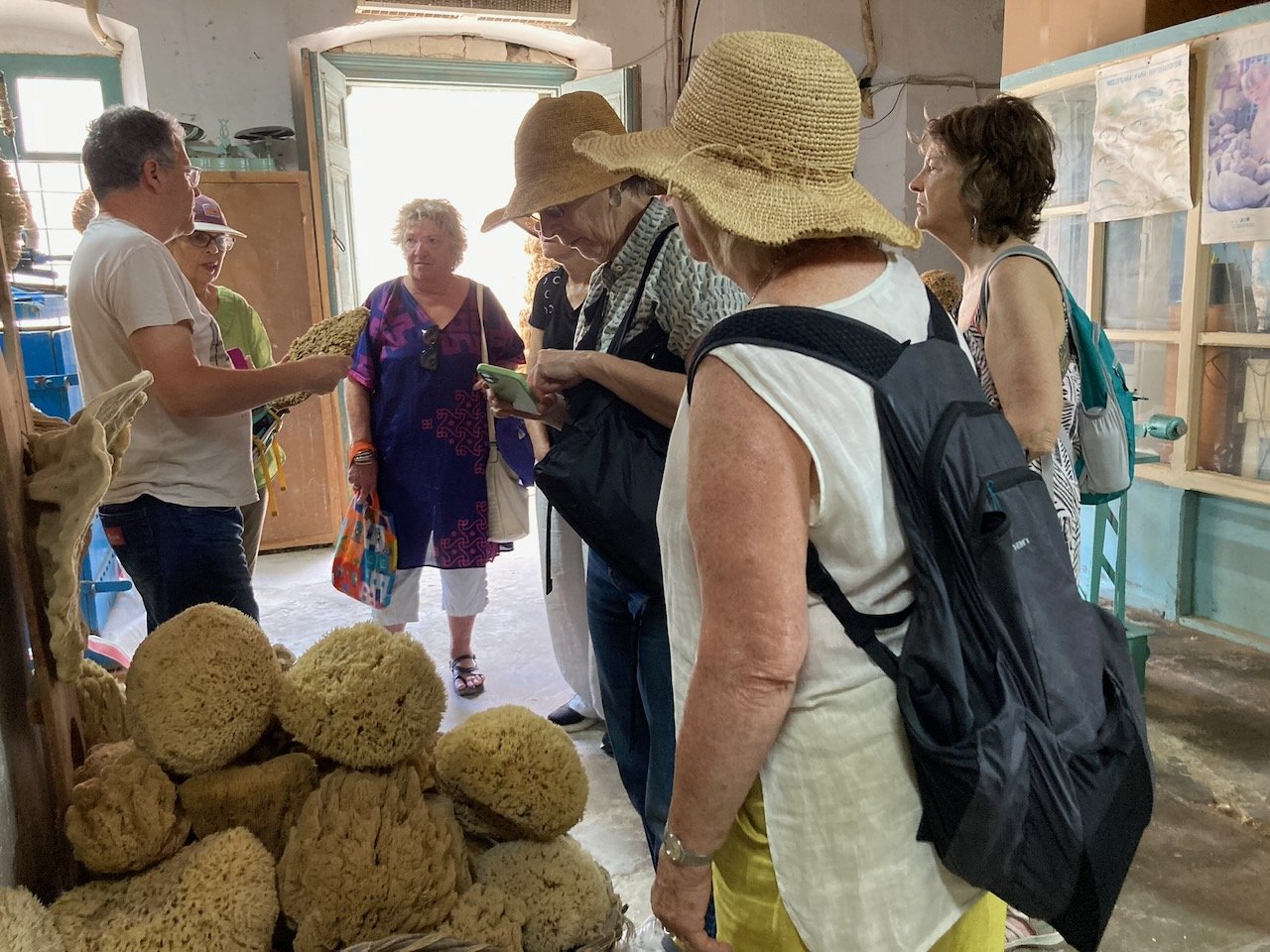
Kristin Tsalapatani — Journeying
Kristin allows us to accompany her on two Kalymnian journeys — ‘me ta pothia’ (on foot) to the sponge warehouse in Pothia, and then by bus to Emporios, in the north of the island. In both accounts, her architectural eye is clear.
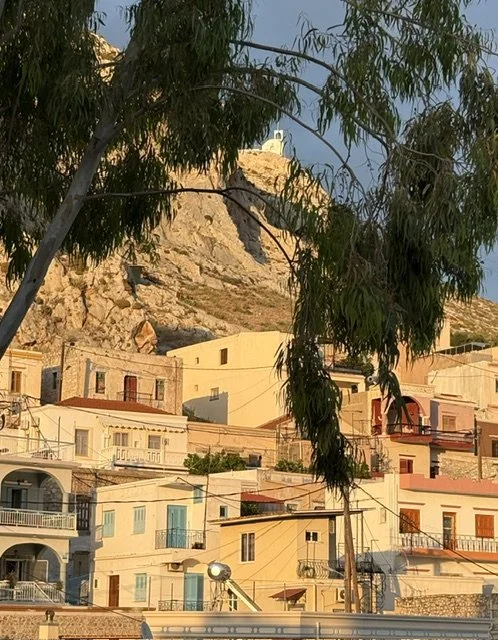
Helen Wyatt — A Perspective
Helen gives us the view from the balcony of her room in the Villa Melina, and a meditation on perspective, Kalymnos-style.
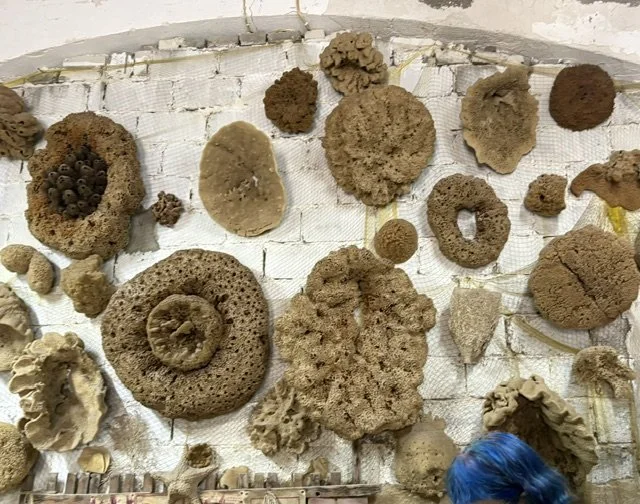
Helen Wyatt and Lesley Walker — A Collage of Sponges
In this collaborative collage, Helen and Lesley combine the photos they took when we visited the sponge warehouse of Kyrios Haramis — the last authentic and functioning spoonge warehouse on the island. In her succinct text, Lesley drscribes the cleaning process that we witnessed.
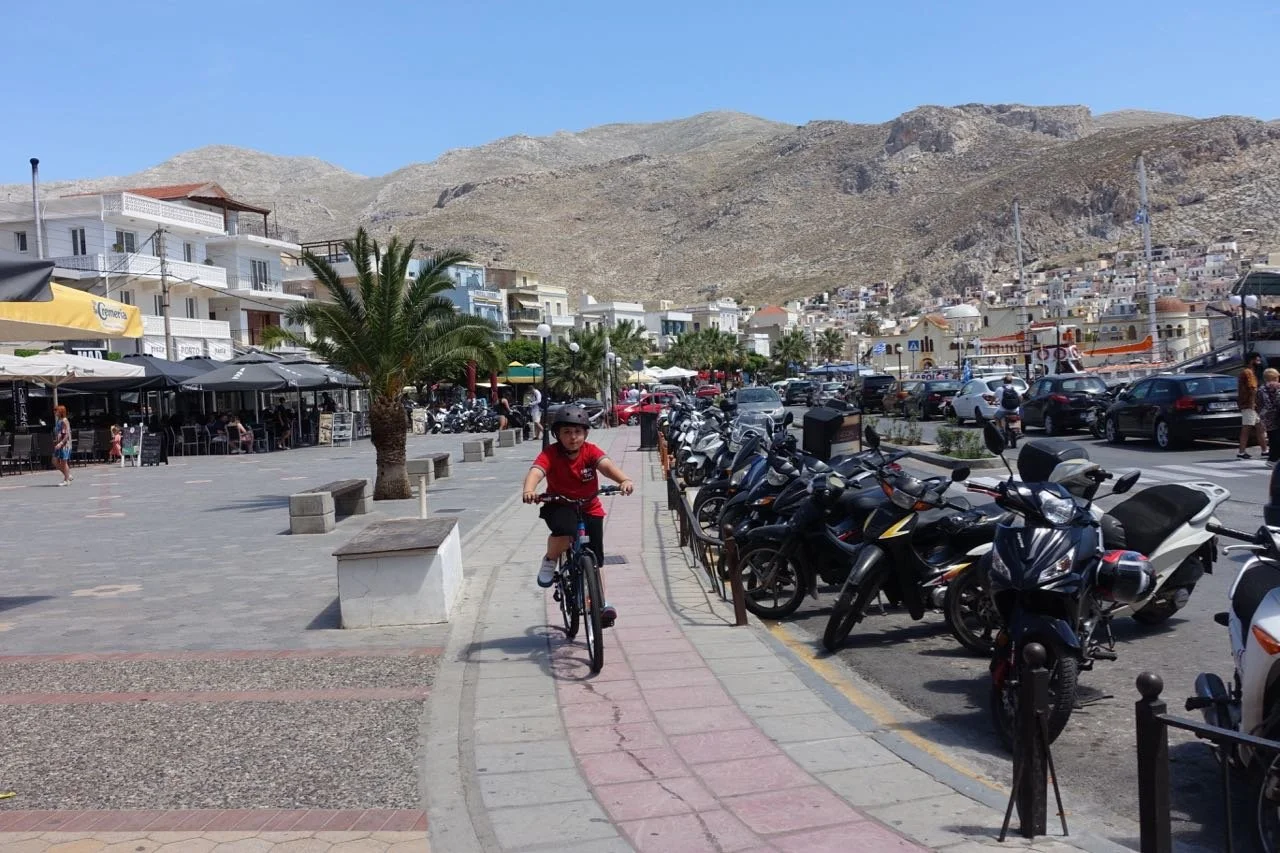
Paula Garrett — A Letter to Charmian
Sitting in a cafe outside Charmian’s yellow house, Paula writes a letter to tell her how things have changed, and yet are still the same, on the paralia (waterfront). Despite pirate ships and other 21st Century paraphernalia, Kalymnos is still Kalymnos.
Janey Runci — A Fistful of Mud
In this poignant piece, Janey Runci records a conversation with George Hatzismalis, the island’s Municipal Tourism Officer, who sat with us at the cafe in front of Charmian’s house and later joined us for lunch. Janey uses this conversation as a doorway into both her longings as a writer, and the dangerous life that faced Kalymnian men in the sponge-diving era.
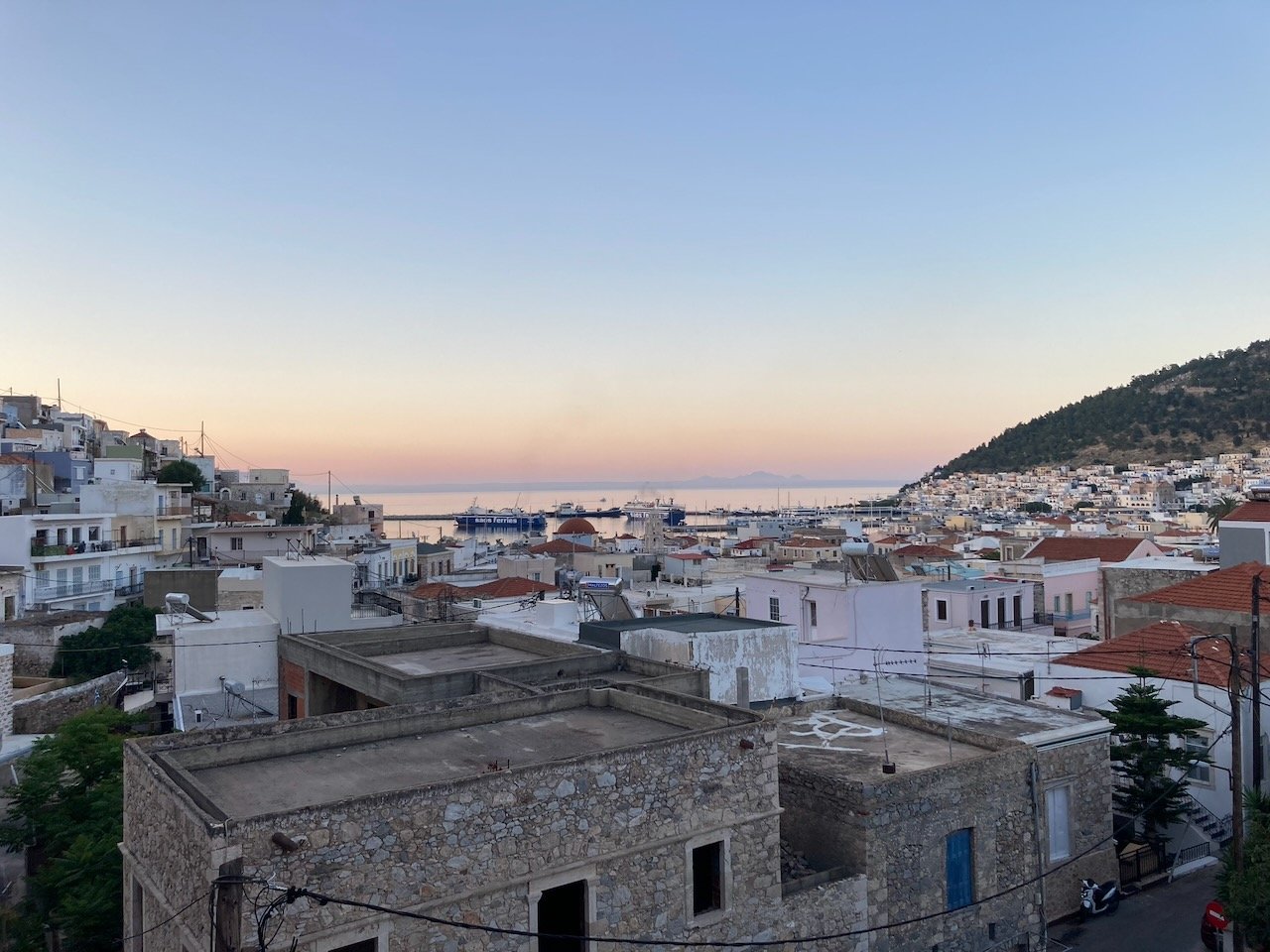
Lesley Walker — How to see Pothia?
In this post, Lesley Walker gives us eyes into the Kalymnian port-town of Pothia as she describes (in words and image) the view looking east and west from the Villa Melina, where we are staying.
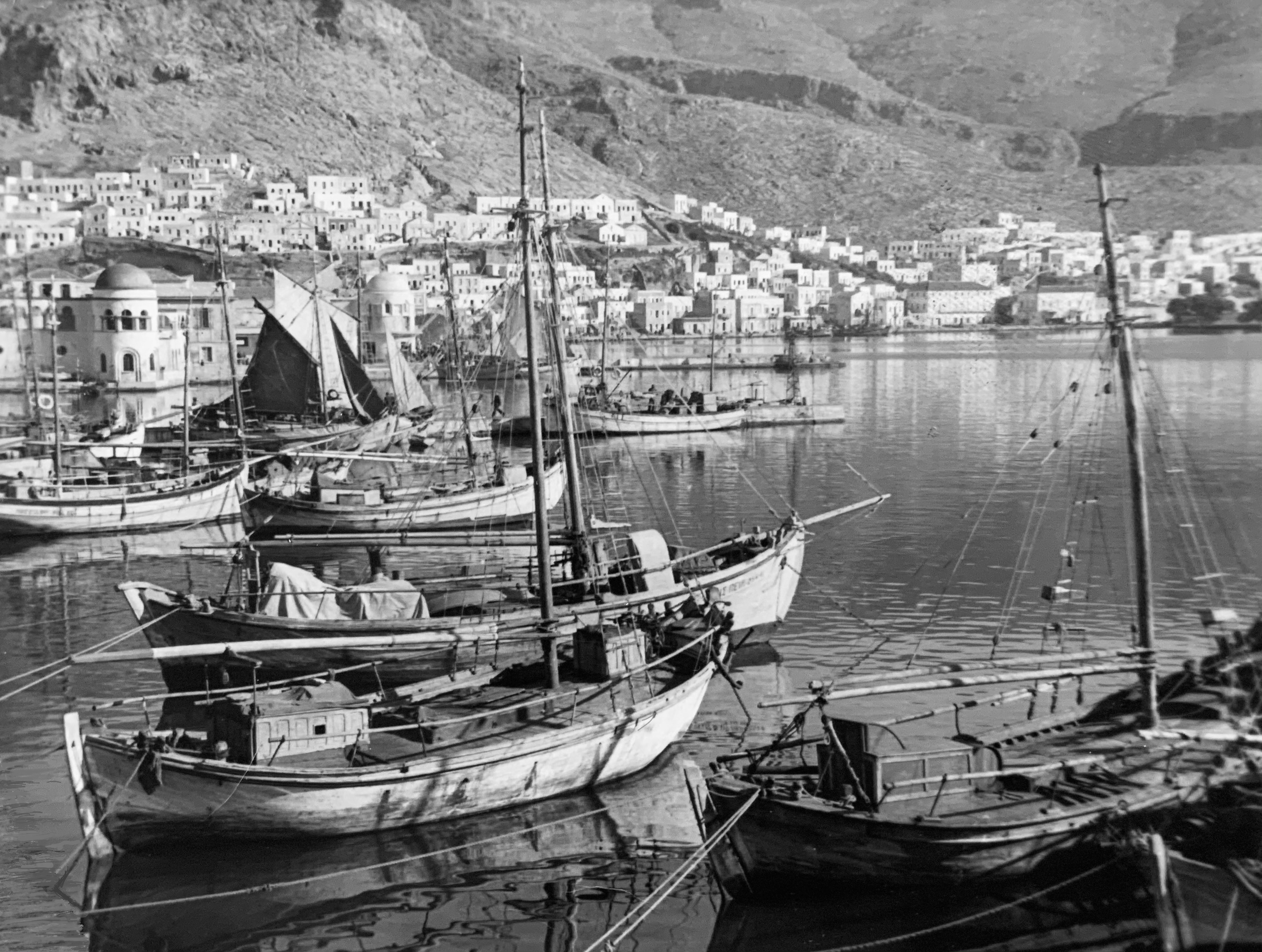
The ‘yellow house’ as Clift’s observation post
For Charmian Clift, the ‘yellow house’ where she made her home on Kalymnos was the perfect observation post for a writer. Her view of the harbour, framed by bare rock hills, can be seen at left.
In this post, Nadia Wheatley reflects on the role of the yellow house in Clift’s writing as she prepares to take the new group of Clifties to the island.
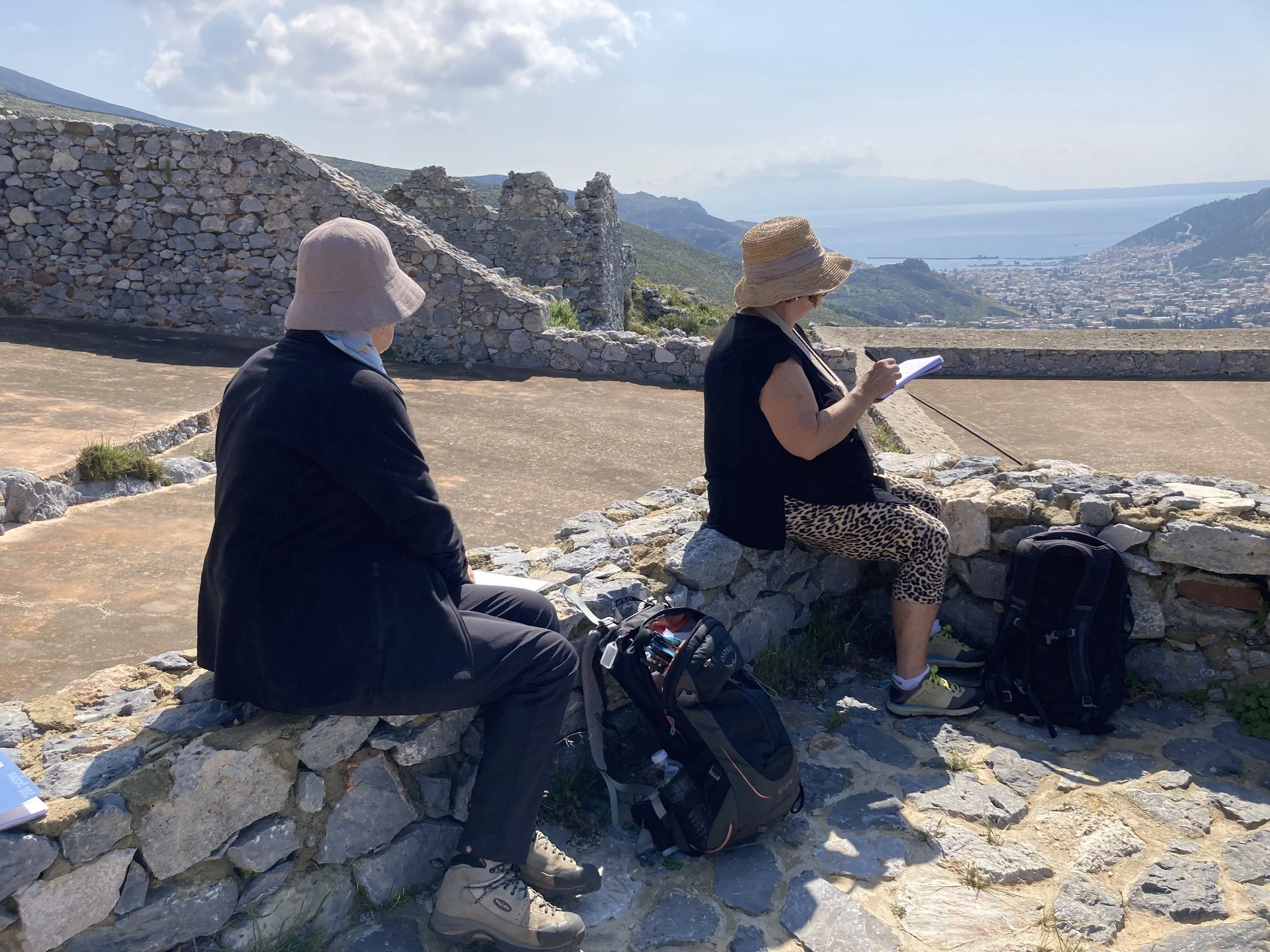
Christine Bayly — Travels with Charmian
Christine Bayly was one of the Kalymnos Workshop participants in April 2025. Although she had never been to Kalymnos before, she had spent some months in Greece with her family when she was young. In this reflection, she brings together both experiences, and gives us a sense of mountains, sea and sky. The image shows Christine (seated at rear) in the citadel of Chora, mapping the view to the port-town of Kalymnos.
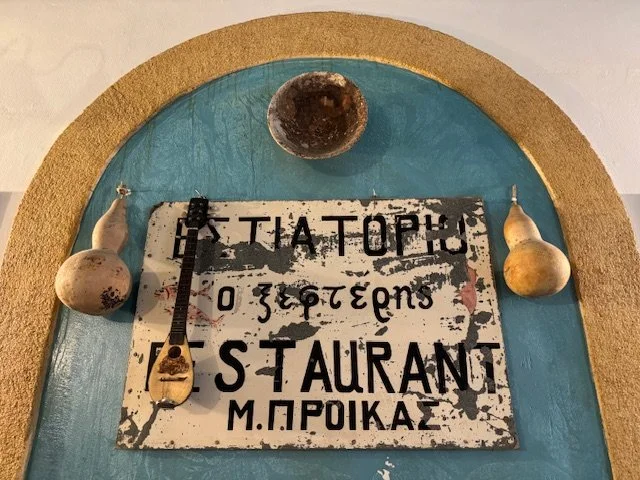
John Hinde — Finding Charmian’s Favourite Restaurant On Kalymnos
British Cliftie John Hinde was not part of our April 2025 Workshop Group, but he has recently done some exploration on Kalymnos that has taken our journey forward. A number of us ate in this oyzeri while we were on the island, but we completely missed seeing the sign! Wonderful to have this new layer of Mermaid Singing uncovered.

Kathy Kallos — Saint Nicholas Church and the Promised Land
Into a description of a farewell visit to the church of Saint Nicholas — the church of the parish where Charmian Clift lived in 1955 — Kathy Kallos weaves stories of Kalymnian migrants. As well, she tells us about the migration journey of her father, who also made the trip to the Promised Land of ‘Afstralia’ in the 1950s. Lighting the candle makes a fitting end to the writer’s pilgrimage.

Carmel Kostos — Adding a further frame to Fotis and Kathy’s story
Although we have now left Kalymnos, the island — with its connection to Charmian Clift — remains close to the hearts of the workshop participants. In this beautifully imagined piece, Carmel Kostos returns to walk in the footsteps of Clift’s heroine Kathy, from the novel Honour’s Mimic, as she climbs the citadel at Chora.

Patricia Anton — Returning to Kalymnos: The journey of translating Charmian Clift
Our Workshop was very fortunate to have a guest apppearance from Patricia Anton, who has translated Mermaid Singing and Peel me a Lotus into Spanish for Barcelona-based publishing company Gatopardo. I always say that I cannot imagine how beautifully Patricia must write in Spanish, given the lyricism of her prose in English. She is the perfect match for Charmian Clift.
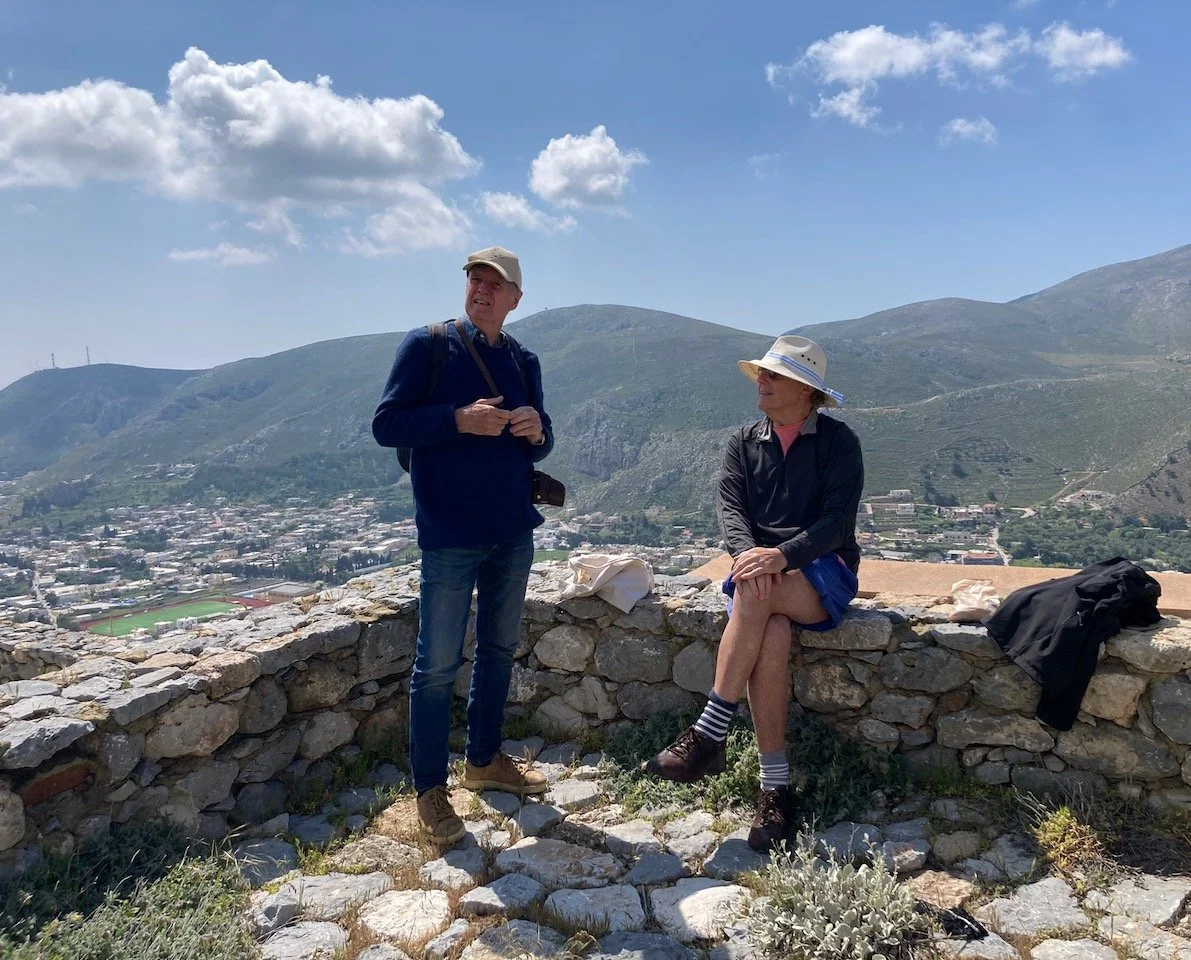
Mike Ranger — A Time of Memories
Taking a photograph of a historic photograph can be a way of bringing the past into the present, even if — or sometimes especially if — we do not know the identity of the subject. In this piece, Mike Ranger (wearing the white hat in the title photo) uses images of Kalymnian women seen in various local museums as a way to focus on Charmian Clift’s observations of the ongoing power of the matriarchal women of the island. Even the reflections in the photos highlight the reflectiveness of this piece.

Nadia Wheatley — The possibilities of a marble grave stele
So hard to follow all these great pieces of writing in the Kalymnos Workshop Journal! For my own contribution, I decided to take one of the objects in the Kalymnos Archaeological Museum, and use it as a springboard for fiction. I used to do this kind of exercise when I was in Greece in the 1970s, trying to find my voice.