In the Nautical Museum in the port of Pothia on Kalymnos, a skafandro diving suit is centrally placed in the back room. It is attached to the wall by a strong rope behind so that it hangs, the huge helmet tipped forward by its weight and also the weight of the stone roped around the diver’s neck to hasten his descent, as well as the basket for the sponges he will gather and carry to the surface. The divers who wore these suits were called mechaniki (singular: mechanikos).
The body of the mechanikos was encased, entrapped in this clumsy lumbering suit, only his hands free to gather the sponges, to reap the treasure of the sea for his masters, and also at times to adjust the valve that controlled the amount of air entering his lungs so that he did not contract the bends, and become crippled or even die.
It is hard to imagine that the diver once had a young lithe body that leapt boyishly from the pier to dive for a fistful of mud many years before he was encased in the skafandro.
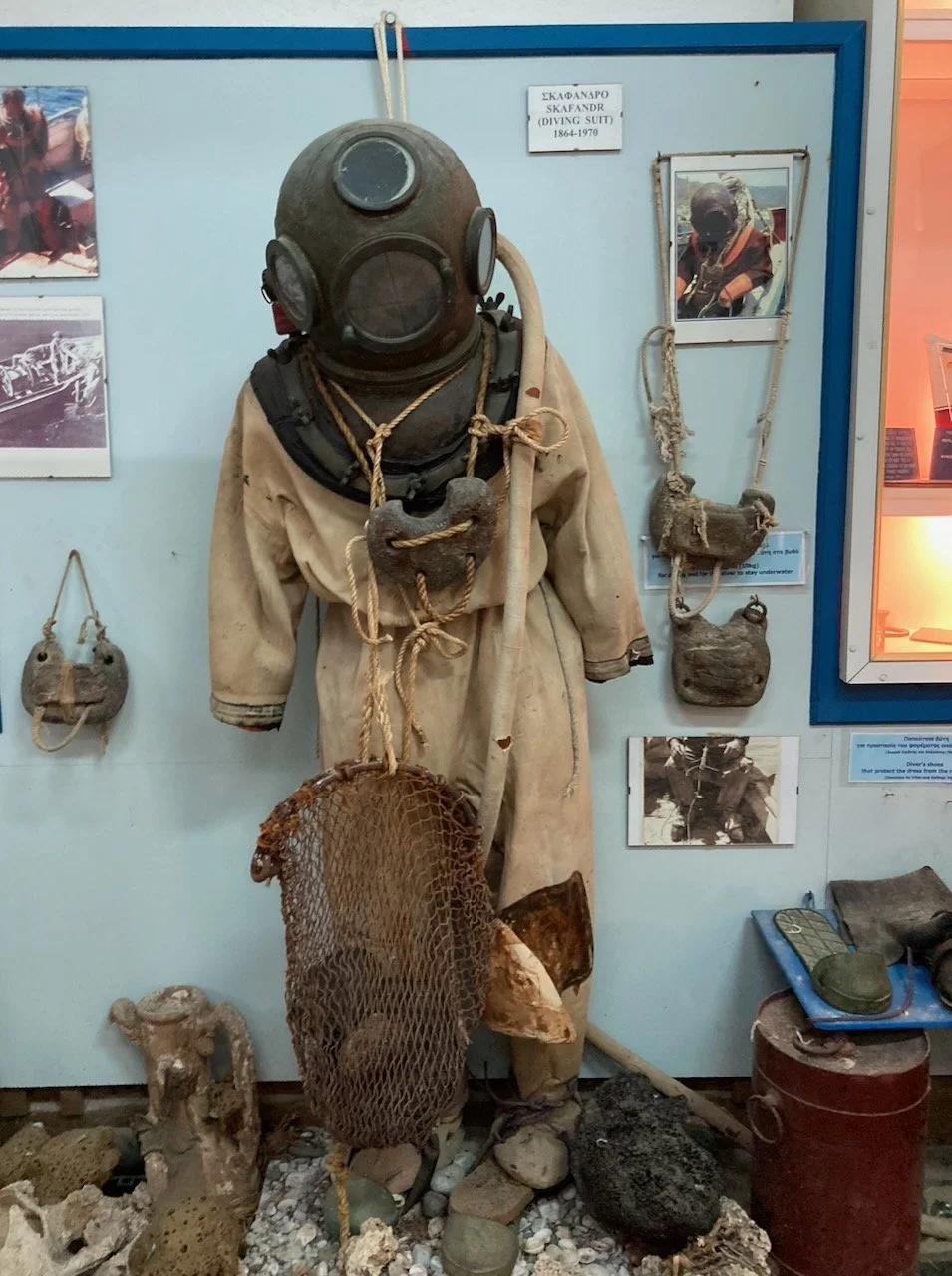
Skafandro diving suit. Photo Nadia Wheatley
I am finding it difficult to be with Charmian Clift and George Johnston as I learn about all this. Especially with George who in a letter to Cedric Flower notes that it is ‘beaut’ that he and Charmian can join in the carousing that is the only source of comfort and release for the divers, and the drinks cost only a penny a glass! Does he remember the broken bodies his mother brought home from the repatriation hospital to the Johnston house in Elsternwick? Does he not want to remember?
I am grieving for my son Sam whose leaping body loved the water, the sand, the sun, the fish, and who loved Greece. That was the first half of his life. After his spinal cord was severed at the age of 20, he spent the next 19 years in a wheelchair before his death in 2013.
How to stay with the crippled, the maimed, how to go on living on Kalymnos, as the Kalymnians do, their beautiful children dancing the old dances and among those dances now the heart-breaking dance of the sponge divers, the mechanikoi, where the role of the crippled diver goes to the best dancer, who so masterfully and painstakingly reproduces and honours the heroic struggle to straighten his poor stricken body, again and again, until he falls.
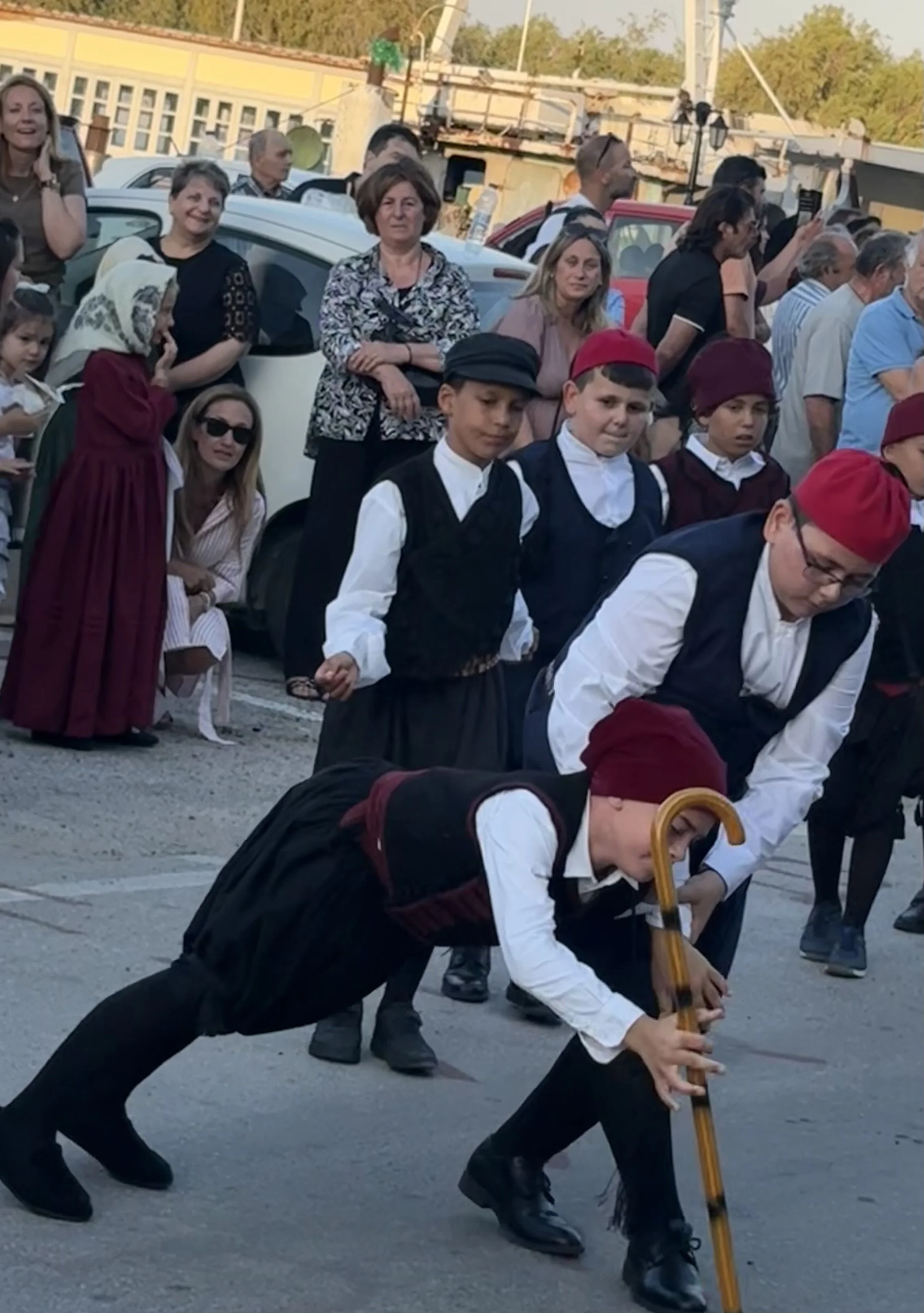
On the port road in Pothia, a boy dances the Mechanikos, as proud family and members of the Kalymnian community watch. Photo Helen Wyatt.
The audience, hushed until the fall, gasps.
And then of course the dancer rises, throws away his stick and leaps and pirouettes and stamps, at least in the limbs of these, his grandchildren.
Perhaps as George Johnston raged against his own body’s brokenness near the end of his life, he remembered the war-broken bodies his mother brought home. I believe that Charmain carried her knowledge of Kalymnos to the idyll of Hydra. She wrote that knowledge of desire and longing and grief and loss into Honour’s Mimic.