Paula Garrett — Two ‘Perspectives’
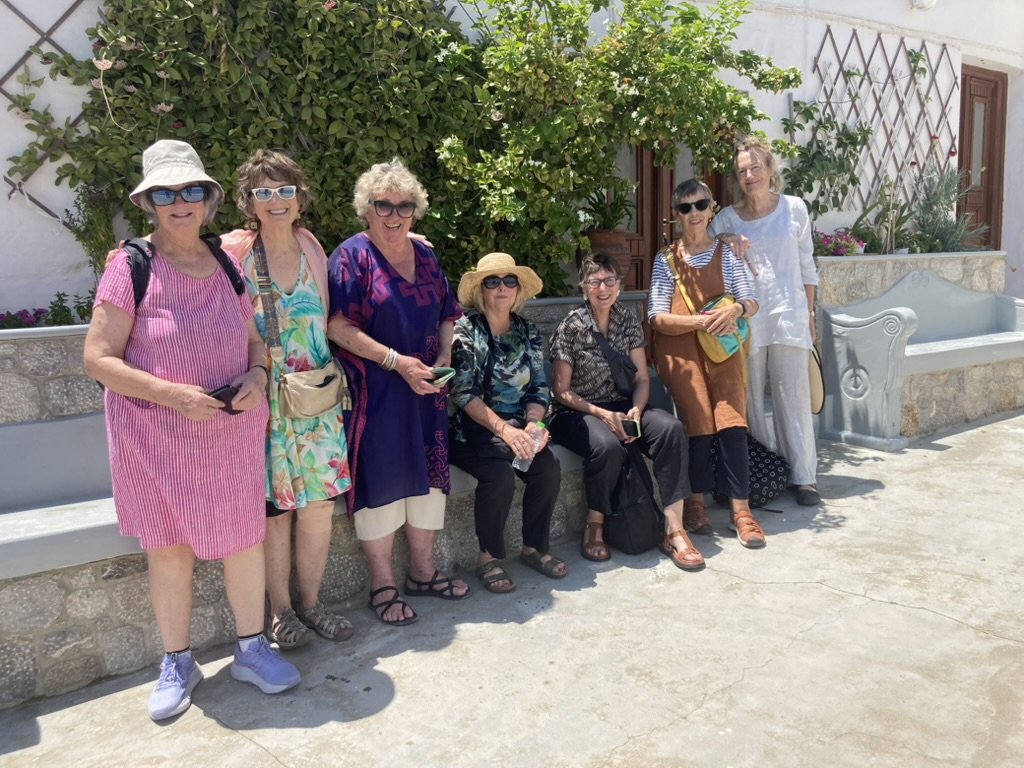
Charmian Clift does get around! And so do the Clifties! Here Paula Garrett (green dress, second from left in the photo) shares two ‘Perspectives’ that she has written, recorded and broadcast for her local radio station in Chicago.
And guess what they are about… Have a look and a listen…
Menus from our 2026 Workshop
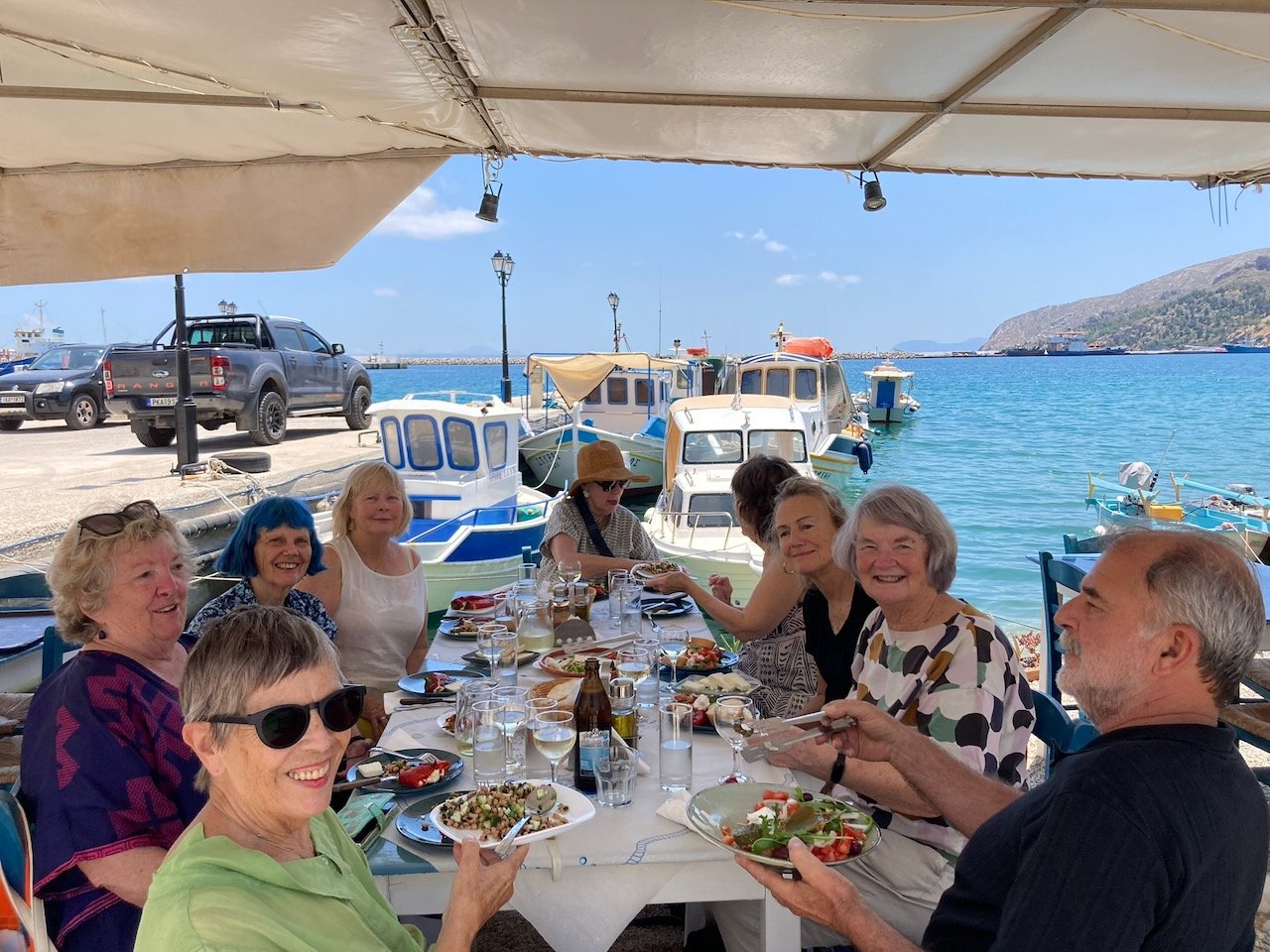
As well as the wonderful breakfasts evert day at the hotel, we had many memorable meals. Here they are…
KALI OREXI: Enjoy!
Maureen McCarthy — Light a Penny Candle
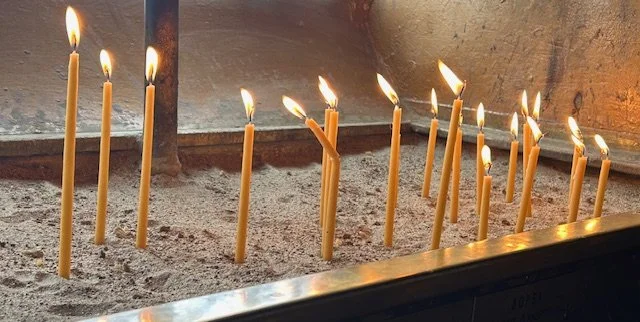
What constitutes bravery? In this brave personal piece, Maureen asks the question, and generously gives a number of answers.
In a letter to a woman friend, Charmian Clift once wrote: ‘Let us live with all our candles blazing.’
May Maureen’s candles blaze for all of us, and for Charmian.
Maureen McCarthy — Lost in Kalymnos
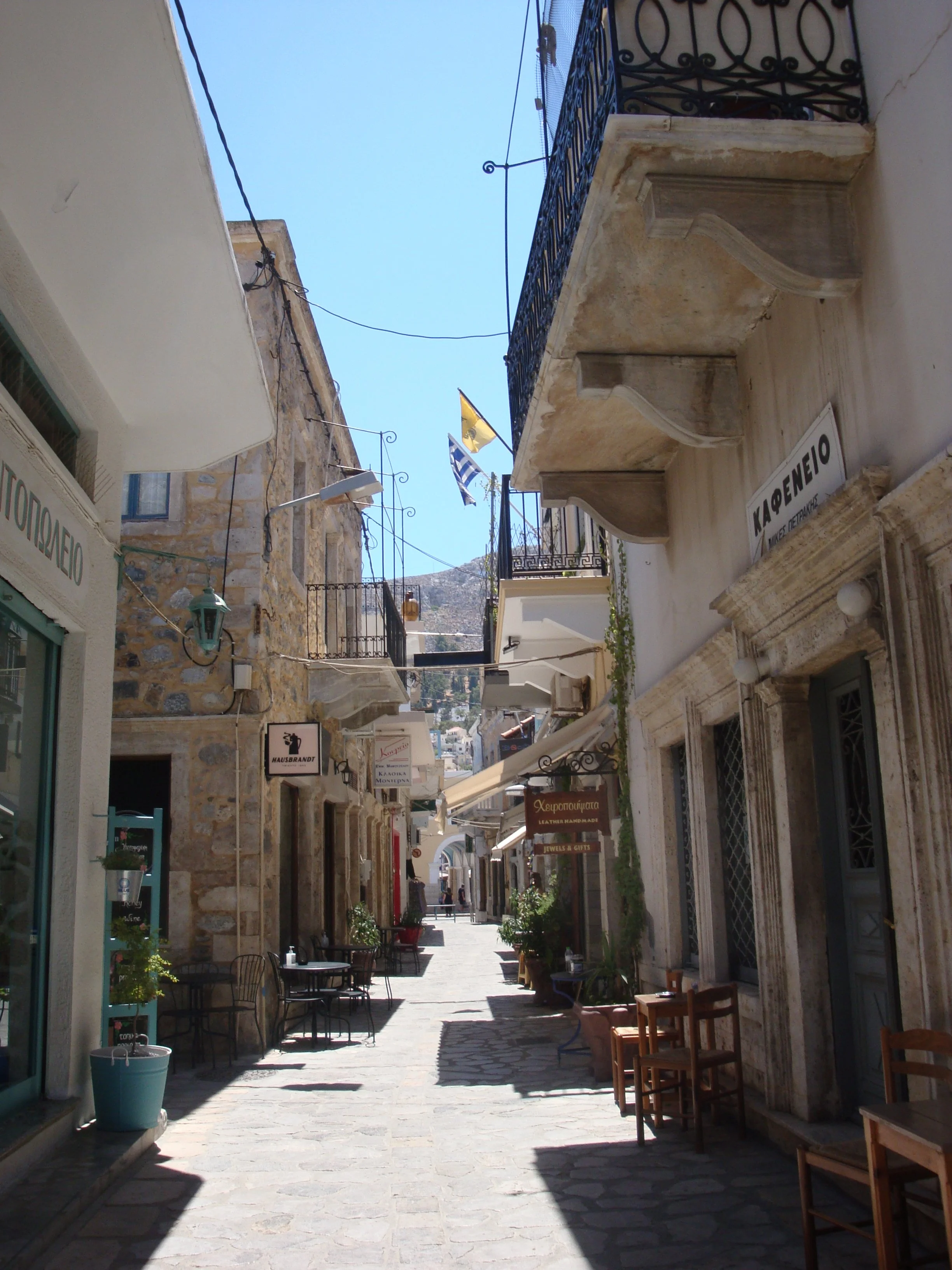
By the light of dawn, Maureen makes a very personal journey through the streets and along the waterfront of Kalymnos’s port-town, raising memories of some earlier Australian inhabitants as well as meeting some of the people of Pothia of today.
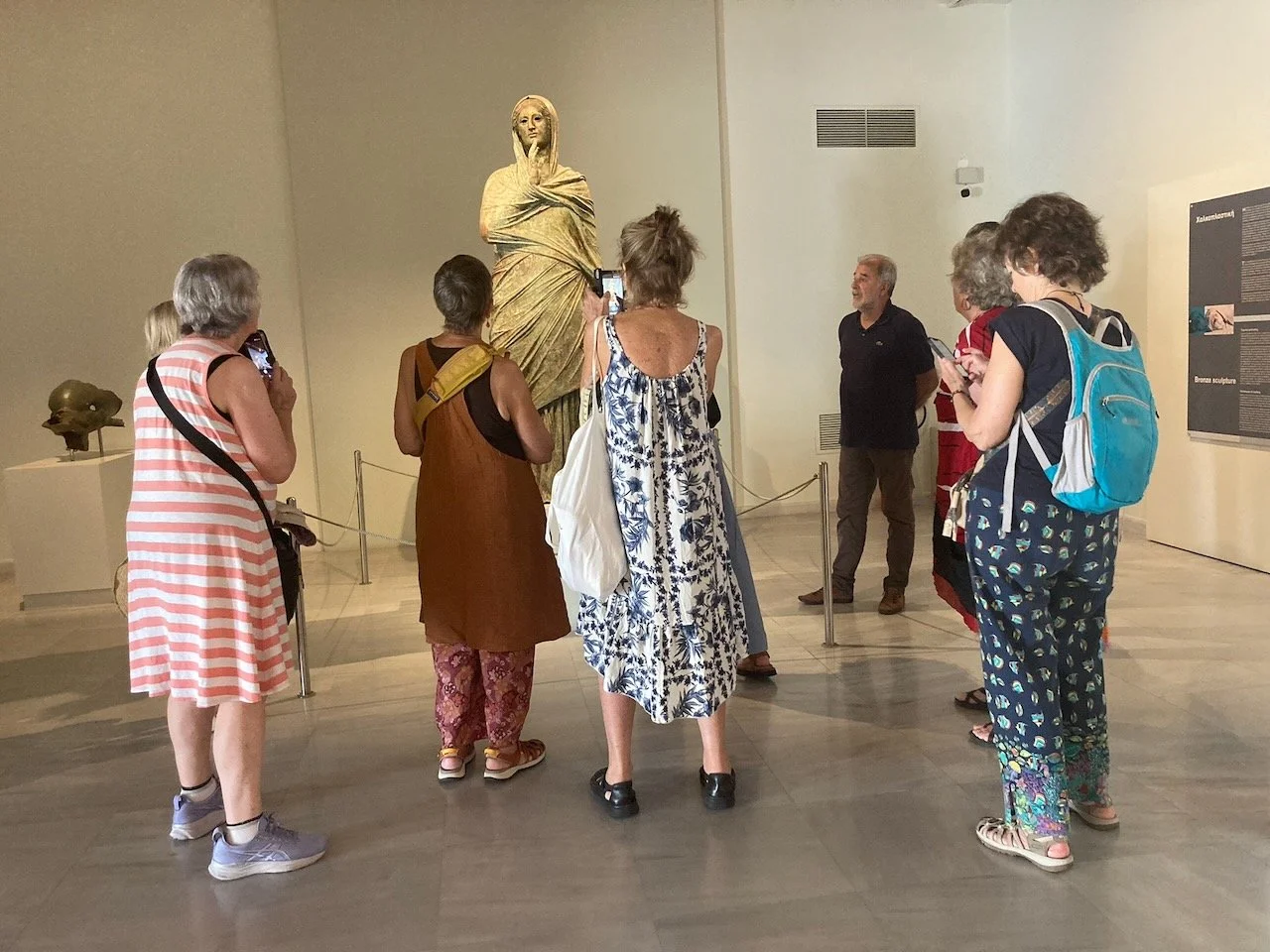
Janey Runci — Room Four at the Museum: a very subjective guide to the archaeological museum in Pothia on Kalymnos
Janey subtitles this piece: ‘A very subjective guide to the archaeological museum in Pothia on Kalymnos.’ But of course, the ‘subjective’ is our objective in the Readers’ and Writers’ Workshop. We are exploring what we see, hear, and feel.
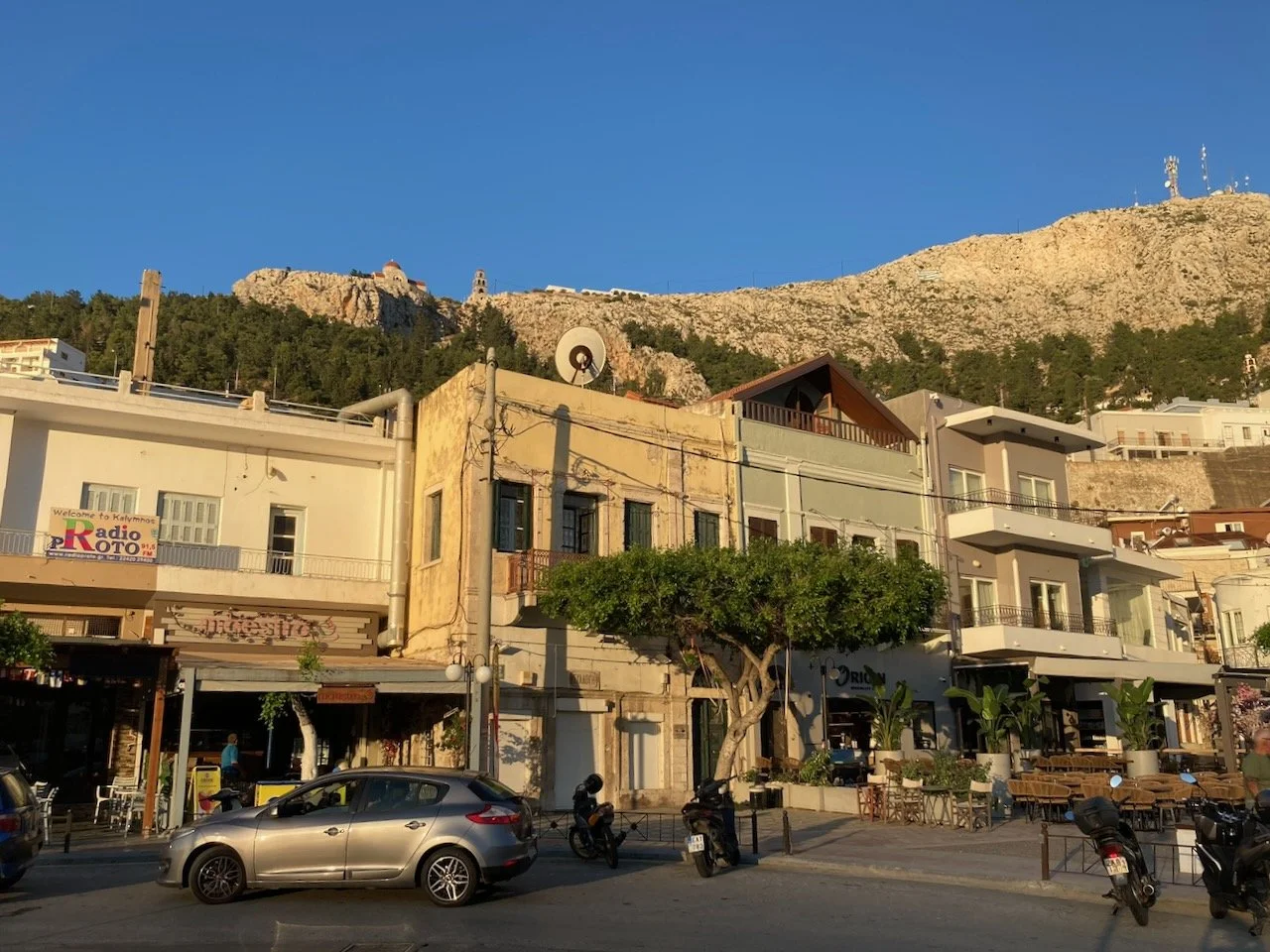
Nadia Wheatley — Sunday morning in Pothia
In the light of early morning, Charmian’s ‘yellow house’ is bathed in gold, and from this angle it is just possible to see her balcony behind the tree that has grown since her time. This house is always at the centre of my Kalymnian pilgrimages.
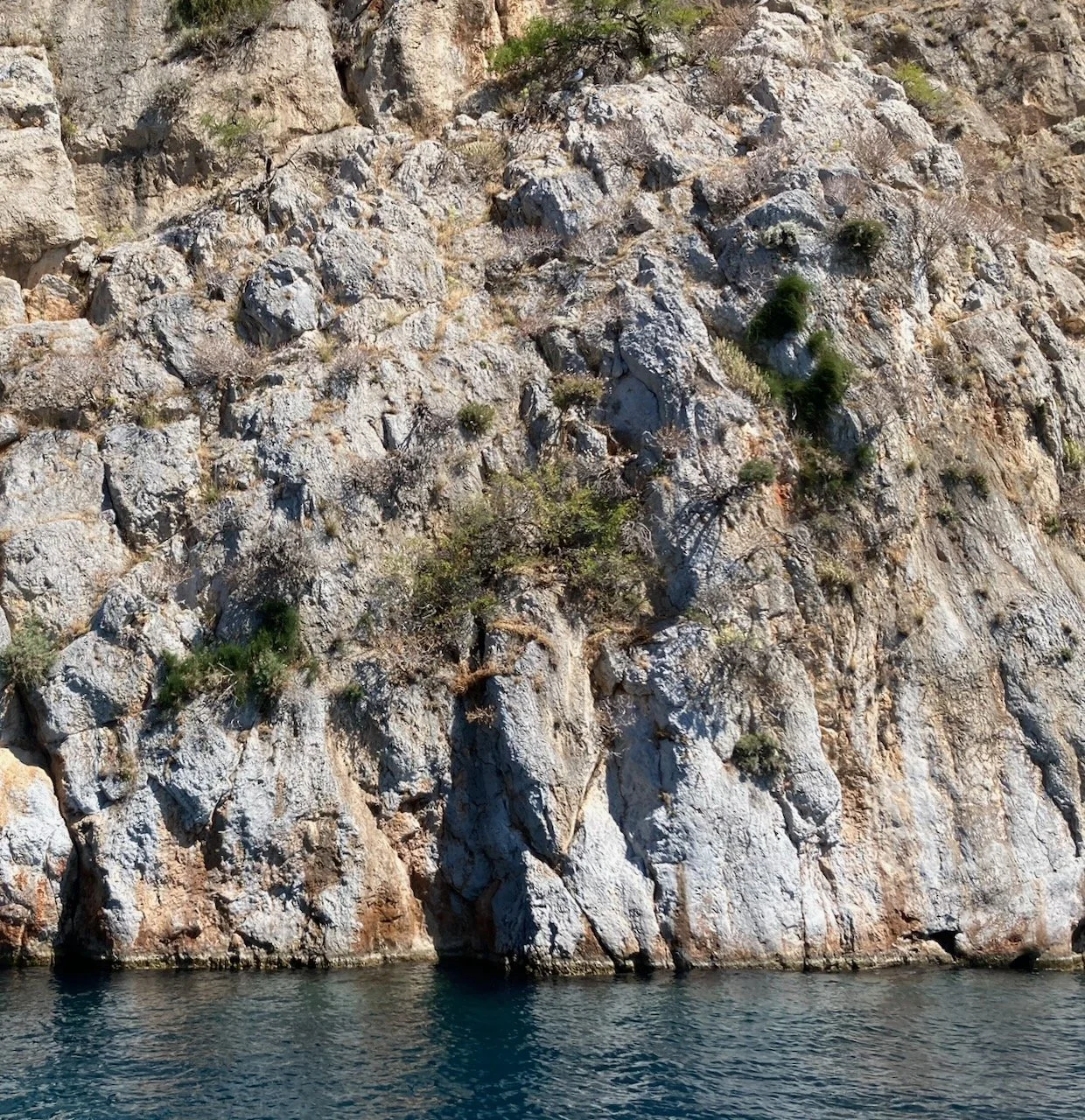
Helen Wyatt — The Boat Trip to Vathy, and Beyond…
‘The mountains touch the water and rise dramatically,’ writes Helen in this piece that begins with our boat trip up the gorge to Rina, the little port for the fertile valley of Vathy. ‘Barren forms suggest I should make them live in metal but it’s about scale and grandeur and that sudden edge.’ Yes: the edge says it all!
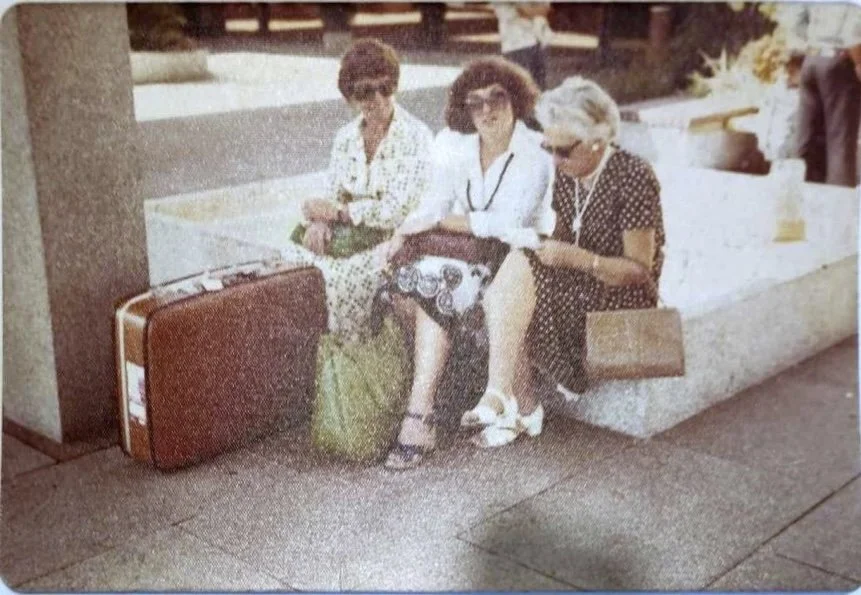
Kristin Tsalapatani — We are all Migrants
Like the Greek family who migrated to Darwin in the photo at left, we are all migrants — as Kristin points out in this reflection. She herself migrated in the other direction: from Australia to Greece. The photo at left was taken on the day she left Australia for Europe in 1977; her mother and grandmother are seeing her off at the airport.
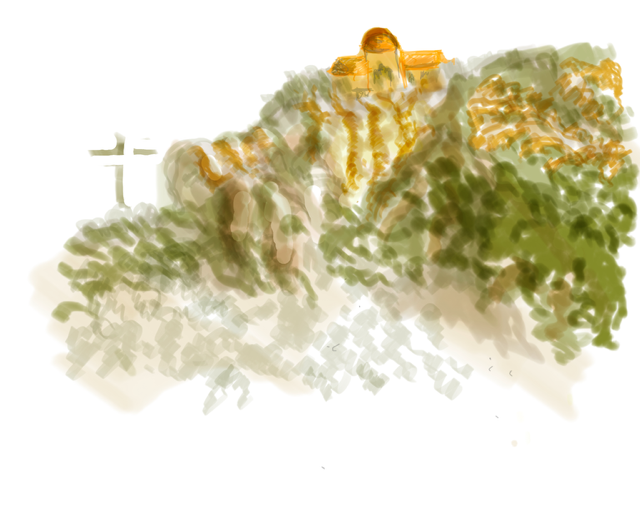
Helen Wyatt — View with Room and Beach Time
Words would ruin Helen’s distilled images of our time on Kalymnos — at the Villa Melina, and at the nearby beach of Vlychardia
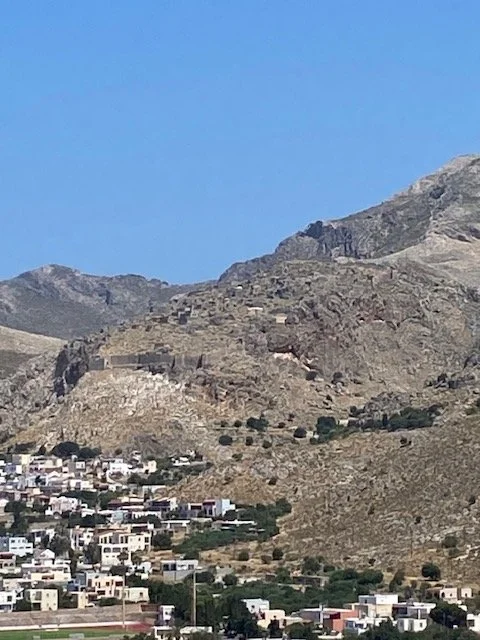
Lesley Walker — Chora
We often think of cities being built for commerce, convenience and colonialism, but here Lesley depicts the different driving force, which cause dthe fortified city of Chora to be established.
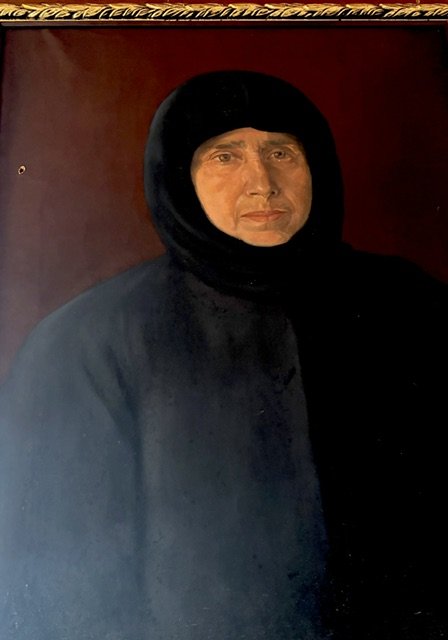
Helen Wyatt — The Convent at Argos
A crucial passage in Mermaid Singing is set at the convent at Argos. It records an argument between two of Charmian’s friends, Sevasti and Yanni. Here Helen imagines Yanni reflecting on that row from half a world away, and after ten years,
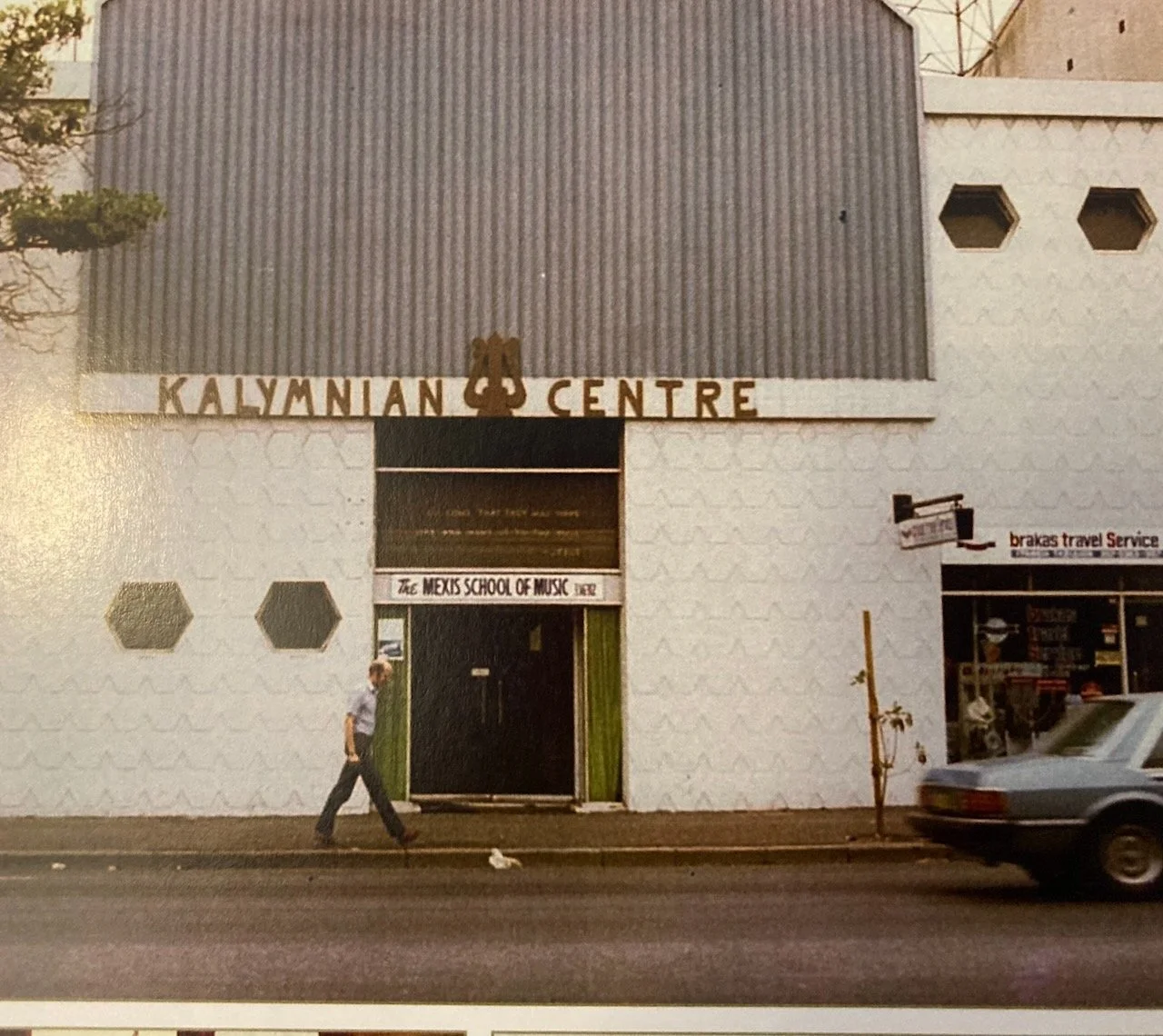
Kristin Tsalapatani — A Letter from Australia
Clift’s essay ‘An Exile’s Return’ (written in the late 1960s) relates how Yanni, a Kalymnian immigrant to Australia, returns to his island because ‘there is no life’ in the new country. Here Kristin presents his point of view in a letter sent to a mate on Kalymnos.
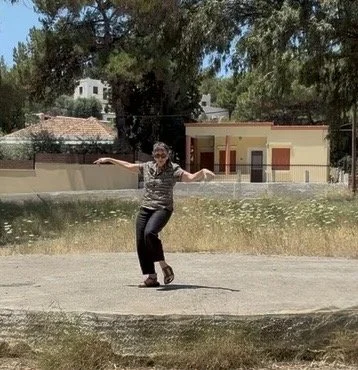
Ann Tout — Dancer in the Dance
Here Ann shares the video she made of Helen dancing on the threshing floor at Brosta — the place where Kalymnians gather for a glendi (festival) on Clean Monday (the beginning of Lent), as Clift records in Mermaid Singing and Honour’s Mimic.
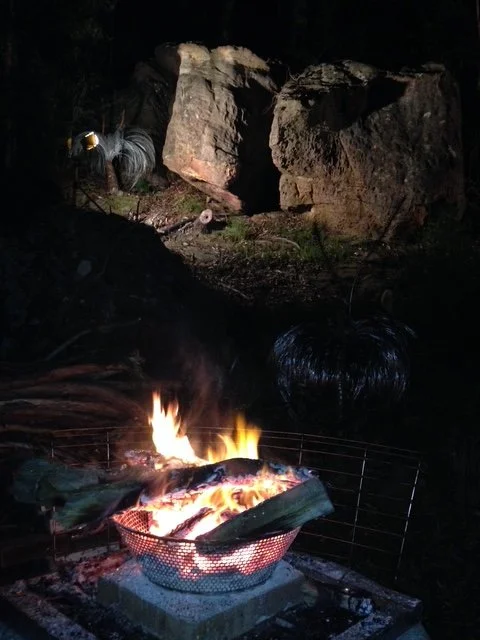
Helen Wyatt — Form and Fire
To all these journal-pieces, the Clifties bring their professional knowledge, their life experience. Here Helen draws on her practical understanding of metal-working to dramatise the making of the Kalymnos Lady.
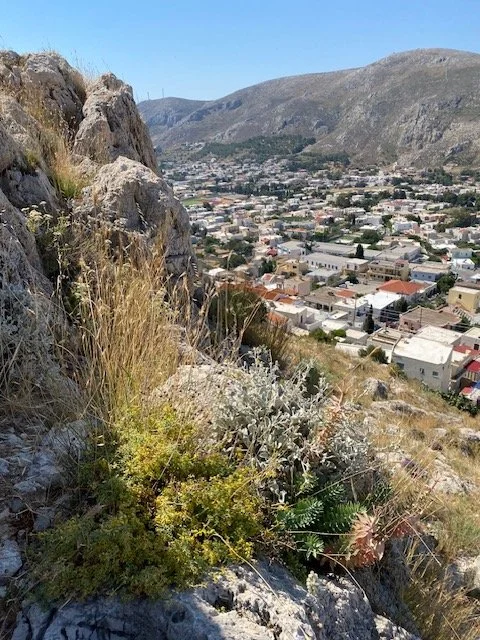
Lesley Walker — Shadow World
For all of us, the climb to the citadel at Chora was an overwhelming experience of mountains, panoramas, frescoes, heat, and pounding hearts. But here Lesley finds her focus in a tiny detail, which nevertheless resonates with a significant symbol that Clift uses in her account of the citadel-climb in Honour’s Mimic.
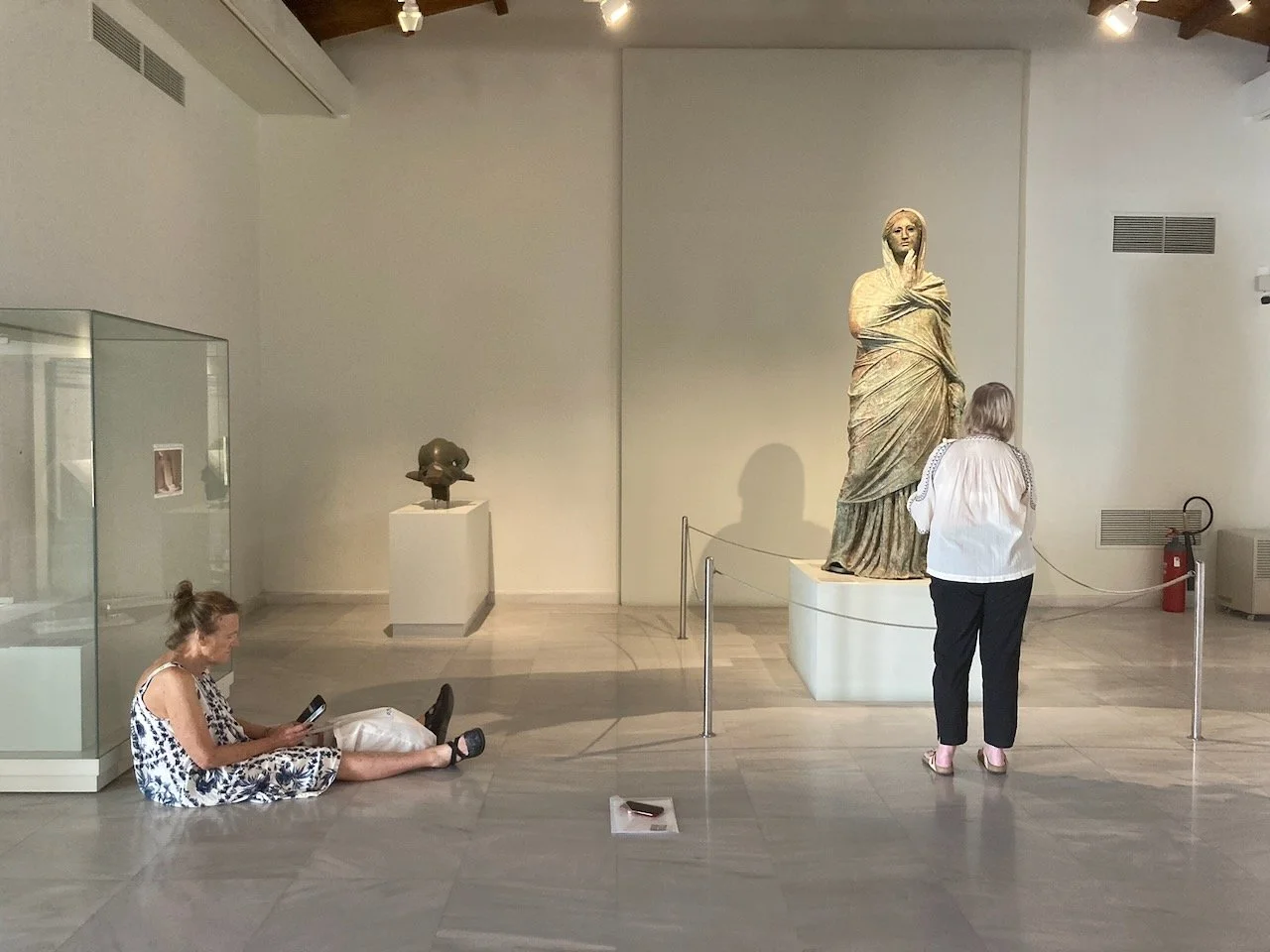
Maureen McCarthy — The Missing Children
In the photo at left, Maureen and Lesley both are engaging with the Lady of Kalymnos. They both dramatise her story…but with very different emphases. Maureen links her back to an ancient myth of the missing daughter, a myth which still resonates today.
Maureen McCarthy — Chora Castle
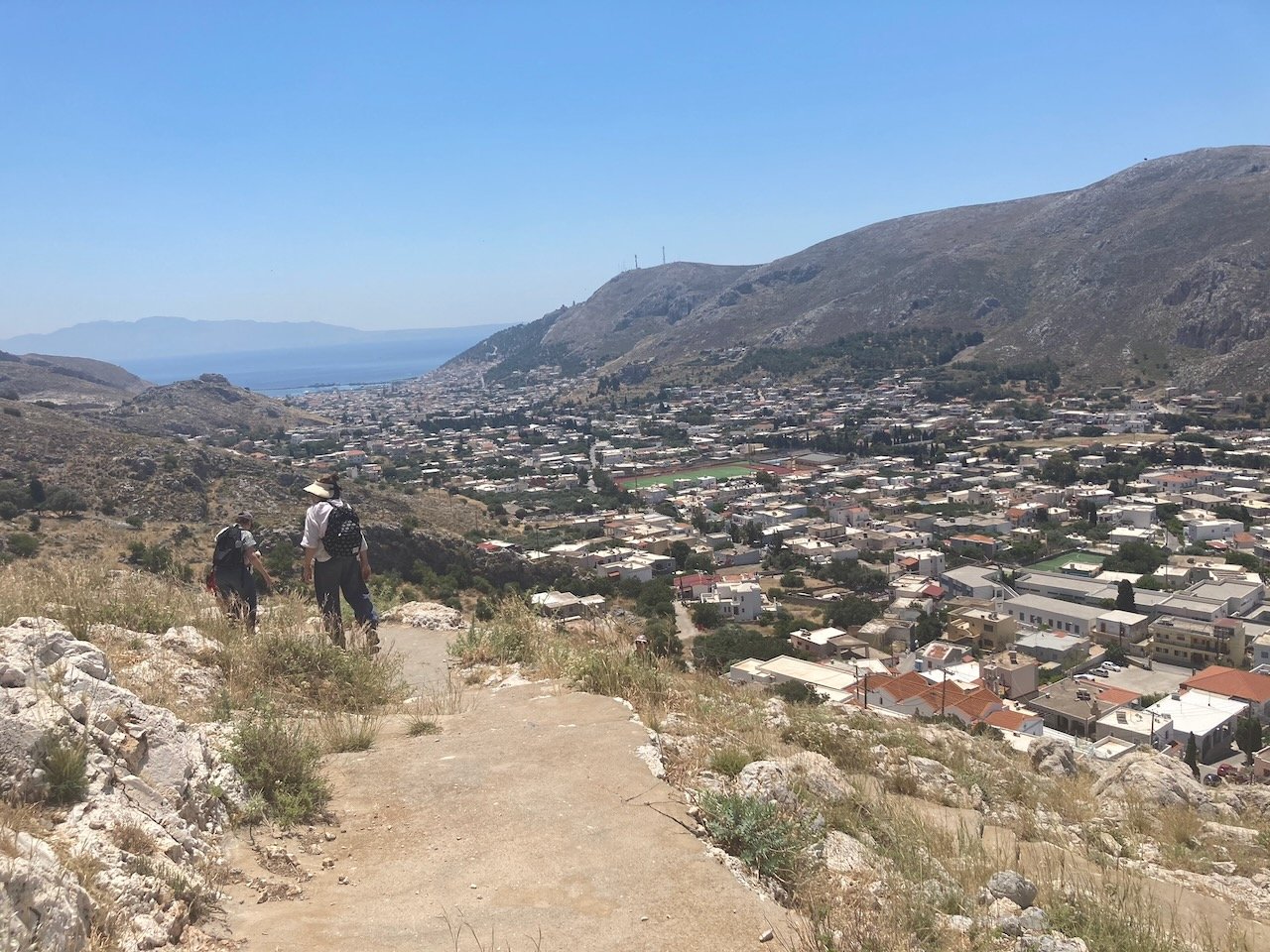
One of the highlights of our time on Kalymnos has been the climb up to the citadel of Chora, which Charmian Clift used as the location for the meeting between her lovers, Kathy and Fotis, in Honour’s Mimic. Here Maureen gives a wonderful sense of the exhilaration of the climb, and the mystical powder of the mountains. In the photo at left, we see the view back down to the port of Pothia.
Kristin Tsalapatani — Eutelistrate
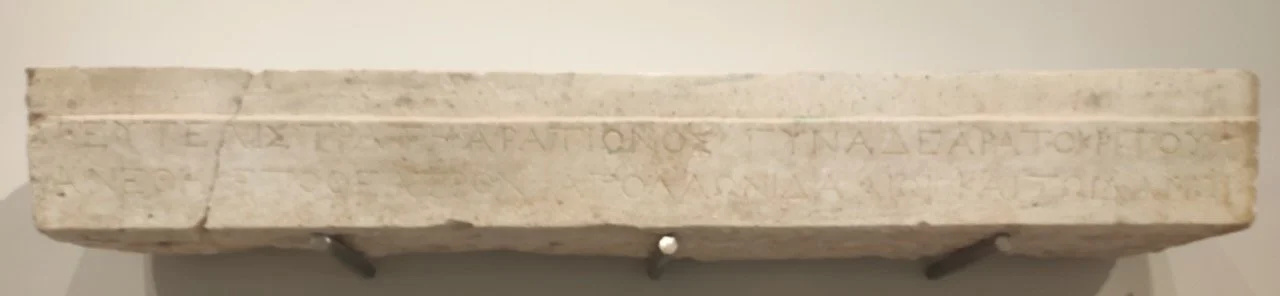
Kristin, like Paula in an earlier post, was inspired by the inscription in the Archaeological Museum, acknowledging the role that Kalymnian woman Eutelistrate had played by donating funds for the new theatre in the sanctuary of Apollo. Kristin’s playful piece highlights the power of the island’s women, even so many centuries ago.
Lesley Walker — Τhe Lady of Kalymnos
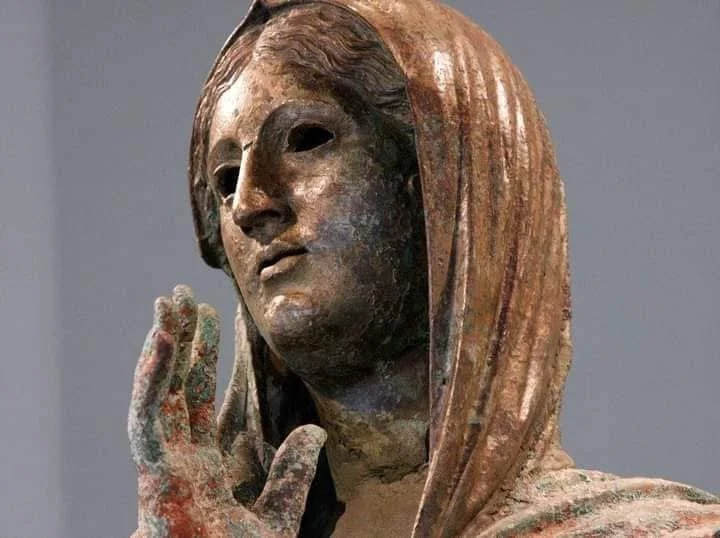
In this haunting piece, Lesley allows us to see through the sightless eyes of the Kalymnian Lady, as centuries and sea creatures pass her by. With hindsight, we know the end of her story: but she doesn’t.
Paula Garrett — Playing Goddesses
Paula says: ‘At the Kalymnos Archeology Museum, I was drawn to the story behind a piece of the facade from a theatre bearing an inscription to Eutelistrate, who made a major donation to the construction of the theatre at the sanctuary of Apollo Dalios in the second half of the 3rd B.C. I imagined her as a child…’