How is such a city born? Built on fear, Chora’s history is measured by degrees of fear. You need fear to build walls on a mountain top, fear of others and what they will take from you. Lives, women, children, most of all. Precious metals from the churches, livestock, food. Plunder. Fear quarries stone, day after day of hammers and wedges and splitting, of lifting and swinging and pushing and hauling, of mortar and lime. Back-breaking work. Fear locks people behind walls, keeps them ever watchful for a sail, a glint of metal in the sun, the rise and fall of long oars.
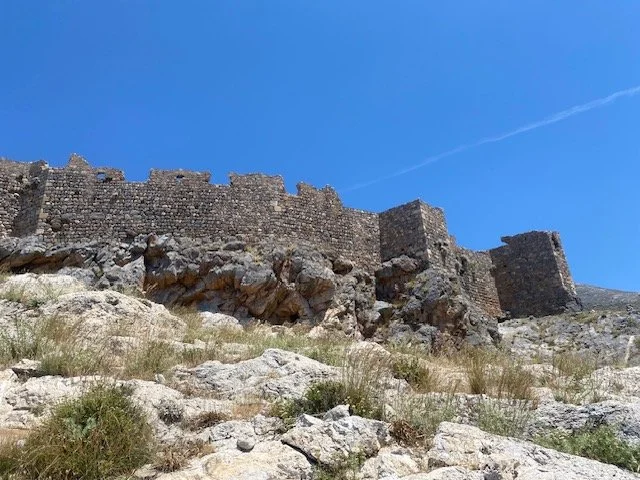
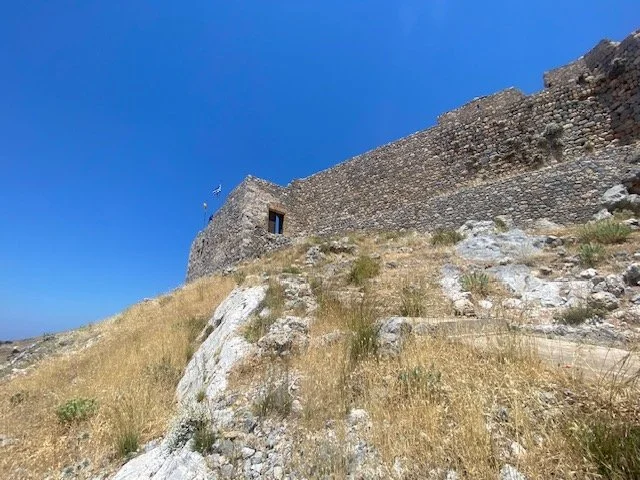
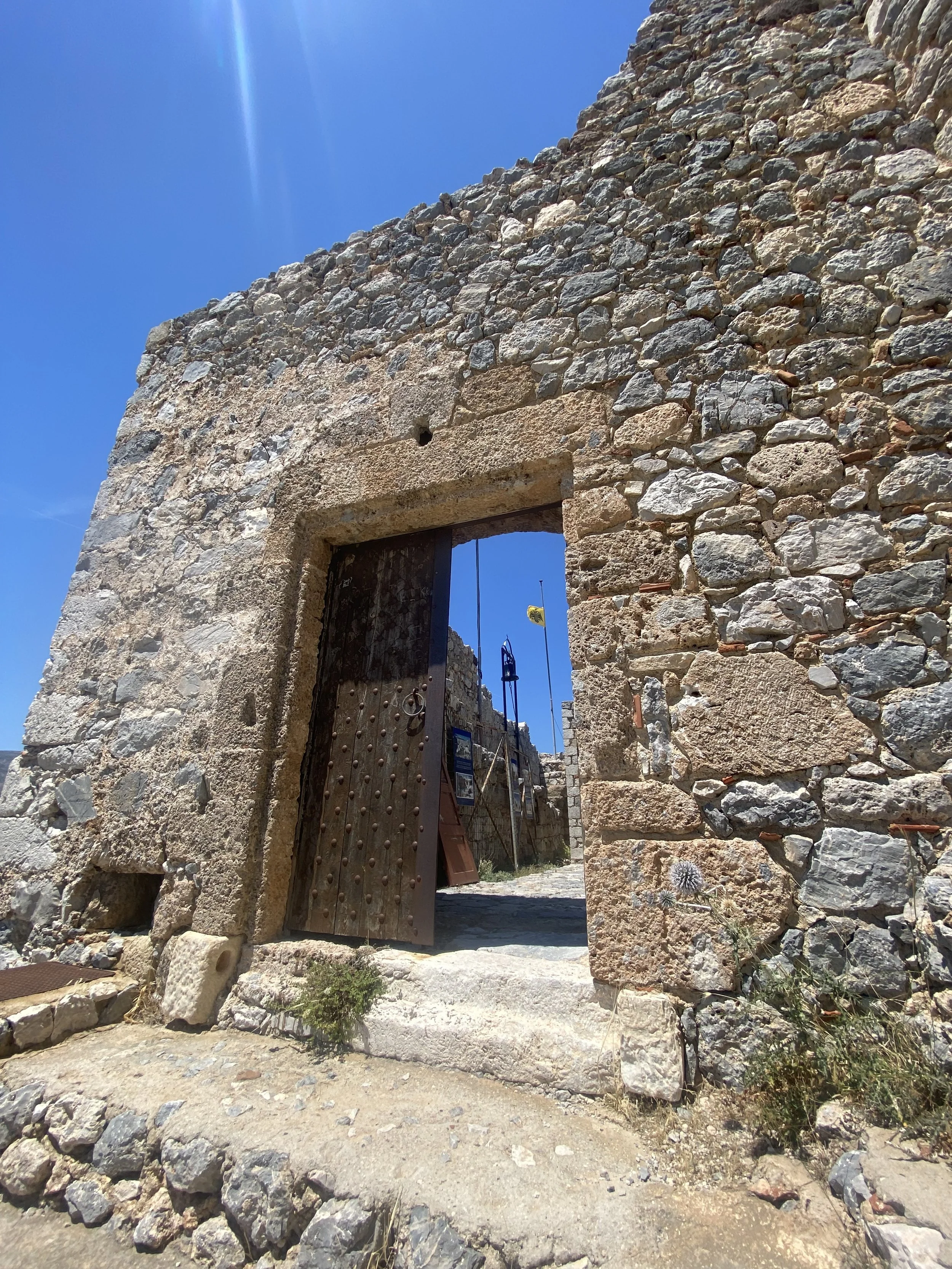
Do they come quietly, sneaking through the valleys at dusk or dawn, or do they roar up from the sea on horseback with swords held high and their fearsome arrows ready to be loosed? The danger comes from the east, in ships from Anatolia, pirate raiders from across the narrow sea, infidels, barbarians, men with theft and violence in their hearts. How do you defend your people? Find a mountain, build a high wall across the steep slopes, a strong wall of stone, make a stout gate. Enclose the fearful. Houses, hearths, churches, workshops, store rooms, water cisterns, armouries, animal pens, chicken coops, all enclosed. Build churches with painted walls, painted and gilded iconostasis, places to pray and hope and gather. Then watch and wait.
Venture out when the coasts are clear to tend orchards, crops in small stony fields, to shepherd goats, to gather wild greens and herbs. But know the “other” will come. Post sentries, guards at the gate, on the walls, watchful for a sail from the north or the south. From Chora, you can look both ways. Watch for a glint of light on metal, watch for ships and men and the violence they will bring. The bell sounds the alarm, back to the gate, no time for stragglers, the safety of the walls, the heavy gate is shut and tree trunks slotted into stone against the timbers as men sharpen blades and people quake in fear. They wait for what is to come.
You need fear to build walls like this and fear keeps the walled city alive. Attack after attack shapes your lives, locks you in, keeps you ever vigilant. Fear is the beating heart of paleo-Chora.
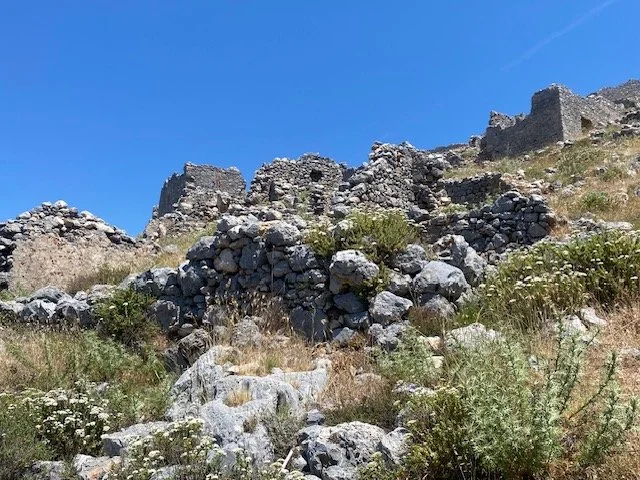
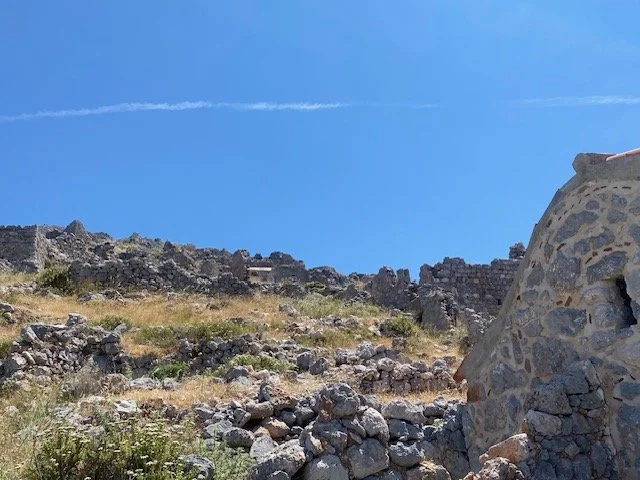
How does a city die? Suddenly, in a cataclysm like Pompeii or slowly, slowly, bit by creeping bit? Built on fear, Chora’s history is measured by degrees of fear. It took nearly eight hundred years for the fear to subside enough for the city to die. “… It was dead. Truly dead”. Its people had gone, family by family, venturing out of the stones and down, down into the valleys, all the way to the beckoning sea. There they built houses, churches and lives with a future looking out, open to the sea.
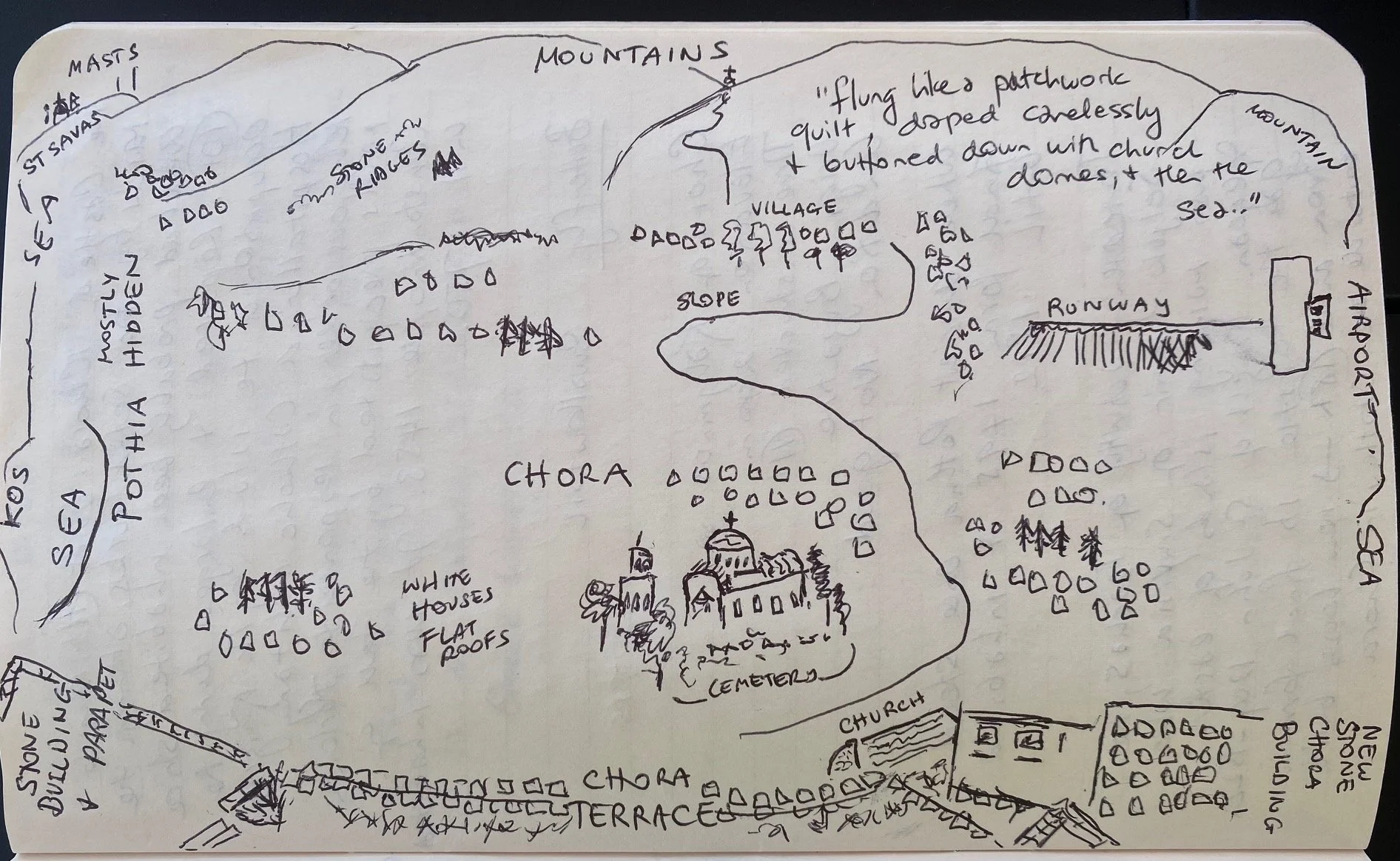
Lesley made this observational map from the ‘terrace’ on Chora Citadel, looking south (left) and north (right) to the sea, from whence the pirates might invade, and down into the settlement of Chora, spreading south into the port of Pothia.